
“国际太极拳日”正式设立!
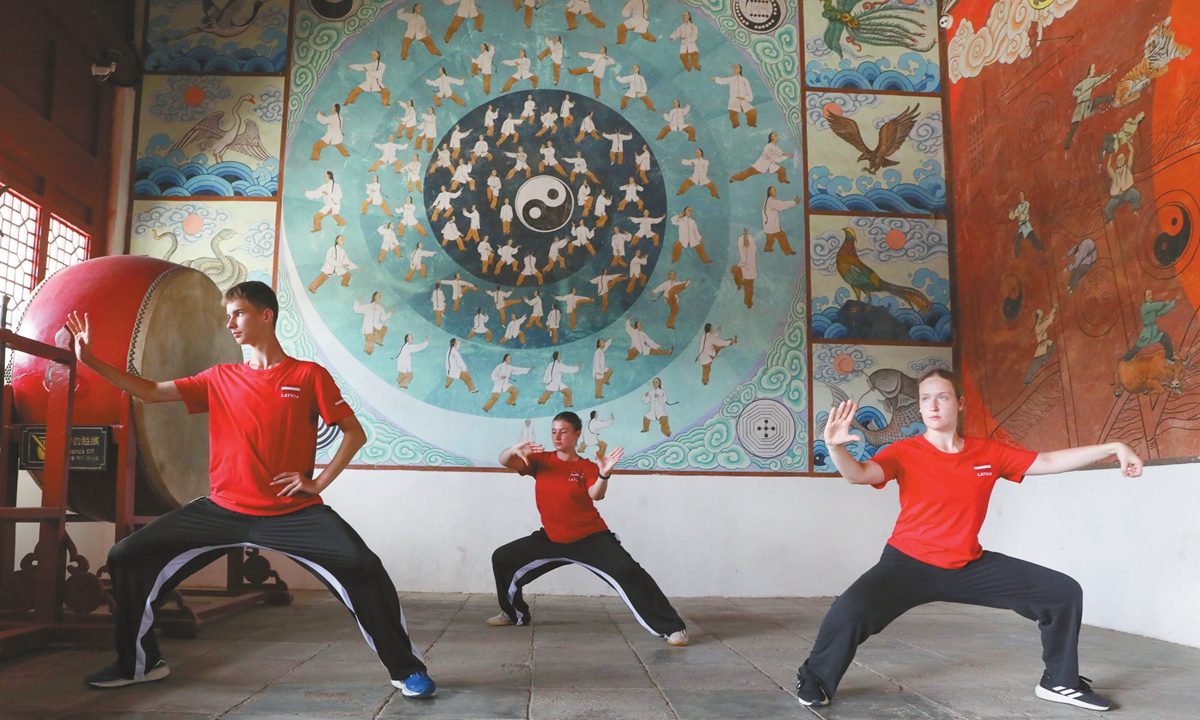
With gentle hand movements, slow body lifts and steady knee bends, Taijiquan has been practiced for centuries by people of all ages and backgrounds. More than just a physical exercise, it is a profound way of life that blends physical fitness with deep philosophical insights, rooted in concepts like yin-yang balance and harmony between humanity and nature.
Recognized as a UNESCO intangible cultural heritage in 2020, Taijiquan has spread to over 180 countries and regions, winning hearts worldwide. A major milestone came recently when UNESCO approved a resolution at its 43rd General Conference in Samarkand, designating (指定) March 21 as International Taijiquan Day. This historic decision marks the first time a martial art has its own international day within the UN system, reflecting widespread global recognition of Taijiquan’s unique value as a cultural bridge.
The chosen date holds great symbolic meaning — it coincides with the Spring Equinox, one of China’s 24 solar terms, when day and night are of equal length. This natural balance perfectly mirrors Taijiquan’s core philosophy of harmony, as noted by scholars. With a history of nearly 400 years, Taijiquan has evolved into several distinct styles, including Chen, Yang, Wu and Sun, each with its own refined techniques and lineage (宗系), while preserving the art’s essential spirit of “overcoming strength with gentleness”.
1.1. What makes Taijiquan more than a physical exercise?
A Its short history.
B Its philosophical depth.
C Its difficult movements.
D Its limited popularity.
解析:选B。B 推理判断题。根据第一段的“More than just a physical exercise, it is a profound way of life that blends physical fitness with deep philosophical insights”可知,太极拳不仅是体育锻炼,还融合了深厚的哲学见解,这正是它超越单纯运动的核心原因。A选项与“practiced for centuries”相悖,C选项文中未提及动作难度,D选项与后文“spread to over 180 countries”矛盾。故选B。
2.2. What does the establishment of International Taijiquan Day show?
A Taijiquan is a new martial art.
B UNESCO favors Chinese culture.
C Taijiquan is globally valued.
D Martial arts need more attention.
解析:选C。C 细节理解题。根据第二段的“This historic decision marks the first time a martial art has its own international day within the UN system, reflecting widespread global recognition of Taijiquan’s unique value”可知,国际太极拳日的设立反映了全球对太极拳价值的广泛认可,即太极拳受全球重视。A 选项与 “nearly 400 years of history” 不符,B 选项 “favors”(偏爱)无依据,D 选项并非该决策所体现的核心信息。故选C。
3.3. Why is March 21 chosen as International Taijiquan Day?
A It has equal day-night.
B It is a major holiday.
C It is easy to remember.
D It honors Taiji masters.
解析:选A。A 推理判断题。根据第三段的“The chosen date holds great symbolic meaning—it coincides with the Spring Equinox... when day and night are of equal length. This natural balance perfectly mirrors Taijiquan’s core philosophy of harmony”可知,3月21日是春分,昼夜平分,这种自然平衡与太极拳的和谐核心哲学相呼应,因此被选为纪念日。B选项“重大节日”、C选项“易于记忆”、D选项“致敬大师”在文中均无依据。故选A。
4.4. What can we learn about foreigners practicing Taijiquan?
A They dislike its spirit.
B They gain physical and mental benefits.
C They only learn it for sports events.
D They find it too difficult.
解析:选B。B 细节理解题。根据第四段的“Many foreigners initially turn to it to ease physical discomfort or explore Chinese culture, only to discover its profound benefits for mental well-being too”可知,外国人练习太极拳最初是为了缓解身体不适或了解中国文化,后来还发现了其对心理健康的益处,即获得了身心双重益处。A选项与文意相悖,C选项“only”(仅)过于绝对,D选项“too difficult”(太难)文中未提及。故选B。