
印尼熊猫宫的中式美学与文化桥梁
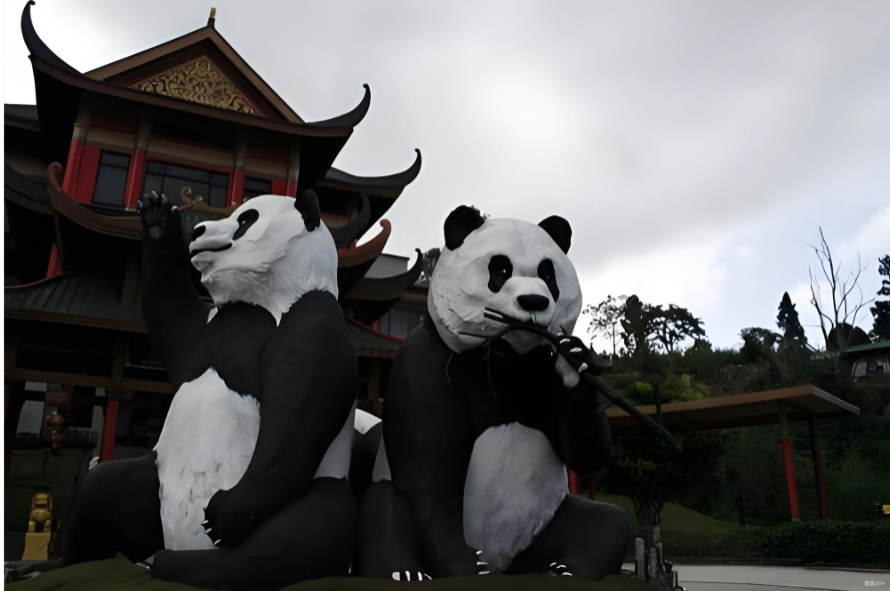
Located on a hillside 1,800 meters above sea level in Bogor, West Java, the Panda Palace at Taman Safari Indonesia has become a beloved destination for visitors. For 30-year-old Nuraen Kartika, her first up-close encounter with giant pandas was more than just a chance to see the cute creatures — she got a vivid taste of Chinese culture too.
“This building is very special,” Kartika, who had only seen pandas in online videos before, said. “The main red color and lanterns make it look just like in China. It’s different from other animal enclosures; it has its own character.” Blending natural landscapes with traditional Chinese architectural aesthetics (美学), the Panda Palace features curved roofs, red pillars, and detailed decorations. Lanterns, Mandarin couplets, and bamboo decorations decorate the area. Informative boards — available in both Indonesian and Chinese — share facts about pandas, alongside photos of Chinese landmarks like the Great Wall, creating an immersive cultural atmosphere. Visitors reach the palace via shuttle bus, enjoying stunning forest views that build anticipation before entering the panda habitat.
Taman Safari Indonesia has over 673 species and nearly 23,000 animals, drawing more than 5 million visitors yearly. Since 2017, the zoo has been home to two giant pandas, Cai Tao and Hu Chun, brought from China’s Sichuan Province. Now 15 years old, Cai Tao and his companion have become zoo stars.
For many visitors, the experience sparks (引发) curiosity about China. Peter Chen from Tangerang noted, “For those who have never been to China, it feels like we don’t have to go there, because China is already here.” Dian Puspita, visiting with her children, added, “I learned bamboo has deep cultural significance in China. I’d love to visit someday — not just for pandas, but for the culture.”
1.1. What can we learn about Nuraen Kartika’s visit to the Panda Palace?
A She gained cultural experience.
B She felt bored with the trip.
C She often sees pandas in China.
D She went there to study pandas.
解析:选A。A 细节理解题。根据第一段的“her first up-close encounter with giant pandas was more than just a chance to see the cute creatures—she got a vivid taste of Chinese culture too”可知,Kartika的熊猫馆之行不仅是看熊猫,还让她真切体验到了中国文化。故选A。
2.2. How does the Panda Palace design make it better for cultural experience?
A By providing forest views.
B Through Indonesian language boards.
C By offering panda feeding chances.
D Using Chinese architectural elements.
解析:选D。D推理判断题。根据第二段中的“Blending natural landscapes with traditional Chinese architectural aesthetics... curved roofs, red pillars, and detailed decorations... Lanterns, Mandarin couplets, and bamboo decorations”可知,中国建筑美学和装饰元素共同提升了文化体验。故选D。
3.3. Which of the following statements is true about Cai Tao and Hu Chun?
A They are the only pandas in Indonesia.
B They were born in Taman Safari Indonesia.
C They are popular attractions in the zoo.
D They have lived in the zoo for 20 years.
解析:选C。C 细节理解题。根据文章第三段的“Now 15 years old, Cai Tao and his companion have become zoo stars.”可知,“彩陶”和“湖春”是动物园里受欢迎的明星。A 选项文中没说它们是印尼唯一的熊猫;B 选项它们来自中国四川不是在印尼出生;D 选项从 2017 年到现在没 20 年。故选C。
4.4. What did Peter Chen suggest about the Panda Palace experience?
A It requires visiting China first.
B It feels like visiting China.
C It focuses only on pandas.
D It lacks educational value.
解析:选B。B推理判断题。根据第四段中Peter Chen的话“For those who have never been to China, it feels like we don’t have to go there, because China is already here”可知,熊猫馆提供了体验中国元素的机会,让没去过中国的人也能感受中国特色,他暗示熊猫宫让人仿佛置身中国,无需亲自前往。故选B。