
伊朗遭遇六十年来最严重水危机
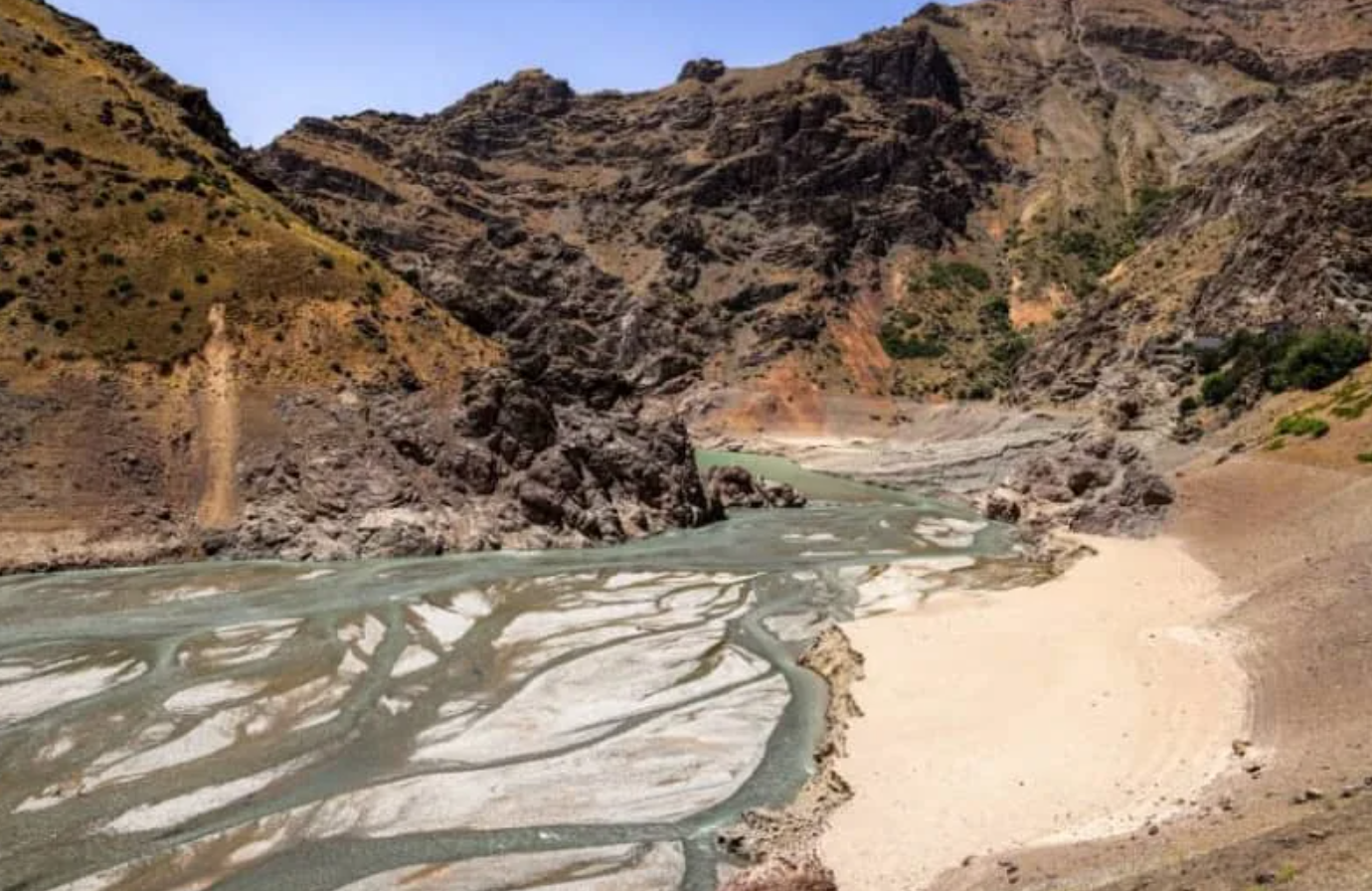
① Iran is facing its most severe water crisis in more than six decades. Major dams supplying drinking water to provinces with millions of residents are nearly empty, and groundwater reserves have been depleted. Many cities have endured an entire autumn without a single drop of rain. In the capital, Tehran, and in Mashhad, the country’s second-largest city, in the north-east, some reservoirs are at less than 5% and 3% capacity, respectively. Authorities have begun cutting off water at night in the capital, according to reports. Iran’s president Masoud Pezeshkian has even warned of possible evacuations if “it doesn’t rain soon”.
② More than 90% of Iran’s water is extracted for farming, with much of it lost to inefficient irrigation practices. Studies show the country’s ambitious dam-building campaign, intended to enhance food and energy self-sufficiency, has disrupted natural ecosystems and contributed to the drying up of major wetlands and lakes. These include Lake Urmia, once the Middle East’s largest salt lake, now reduced to a bed of salt that could fuel dust and salt storms across the region.
③ While climate change has contributed to the worsening drought, Iran’s water crisis has mainly been caused by poor management. Limited regulation of groundwater extraction including widespread drilling of around one million wells, half of which are illegal, has severely depleted aquifers across the country.
④ As lakes and rivers dry up, their exposed beds could turn into vast sources of sand and dust. These particles can travel thousands of kilometres, crossing national borders and degrading soil and air quality across the wider region.
⑤ Can anything be done? The short answer is yes.
⑥ Real-time water accounting – using tools such as space satellites – can identify critical areas and guide emergency action. The government must also inspect areas affected by subsidence or over-extraction. Then it must take immediate action, including temporary closures or relocations where safety is at risk.
⑦ Mid-term priorities should focus on improving monitoring and efficiency. Managed aquifer recharge (a strategy that deliberately directs water into underground reservoirs) using stormwater or treated wastewater, precision irrigation, digital agriculture, and AI-based irrigation scheduling can dramatically reduce losses of water.
⑧ Long-term recovery also depends on governance. Legal caps on groundwater abstraction, and economic diversification away from water-intensive crops are essential. Incentivising efficient irrigation and wastewater reuse plus adjusting water pricing to reflect scarcity would help. The country must diversify its economy so that fewer livelihoods depend on water-intensive industries, such as farming.
⑨ Together, these steps could stabilise Iran’s water systems and prevent further environmental, social, and economic damage.
原创编写 版权所有 侵权必究 每日更新 个性化阅读 英语飙升
1.1.The word “depleted” in paragraph 1 is closest in meaning to ________.
A seriously exhausted
B adequately preserved
C properly managed
D partly discovered
解析:选A。 A词义猜测题。第①段描述了伊朗面临数十年来最严重的水危机,主要水坝“几乎空了(nearly empty)”,并与“地下水储备已被____”并列。这种平行结构表明“depleted”与“nearly empty”语义相近,都表示资源严重耗竭。因此A项“严重耗尽”为正确选项。B项“充分保存”和C项“妥善管理”与危机语境相反;D项“部分发现”不符合上下文逻辑。故选A。
2.2.The example of Lake Urmia is used to illustrate ________.
A the success of dam construction
B climate change’s severe impact
C regional cooperation necessity
D dam construction’s ecological damage
解析:选D。 D例证题。第②段中乌尔米湖的例子紧接在“雄心勃勃的筑坝运动破坏生态系统”的论点之后,具体说明筑坝如何导致主要湖泊干涸。A项与原文相反;B项气候变化非该例证直接服务的目的;C项区域合作文中未涉及。故选D。
3.3.It can be inferred that groundwater depletion is primarily due to ________.
A the effects of climate change
B a lack of effective oversight
C the reduction of surface water
D the needs of energy production
解析:选B。 B推理判断题。第③段将“地下水开采监管有限”以及“约一百万口井中有一半是非法的”作为管理不善的具体表现,并指出这严重耗尽了含水层。由此可以推断,缺乏有效监管(B)是地下水枯竭的主因。A项气候变化是加剧因素而非主因;C项地表水减少是结果而非原因;D项能源生产需求在文中未作为主要原因被强调。故选B。
4.4.Mid-term solutions emphasize the use of ________.
A economic incentives and legal caps
B international aid and cooperation
C technological innovation and management
D public education and awareness campaigns
解析:选C。 C细节理解题。第⑦段讨论中期解决方案,其核心是“改善监测和效率”,并列举了“精准灌溉、数字农业、基于AI的灌溉调度”等技术和管理手段。因此技术创新与管理(C)是重点。A项经济激励和法律限制是第⑧段长期方案的内容;B项国际援助和D项公众教育在文中未提及。故选C。
5.5.What can be inferred from the proposed solutions?
A Technological means alone can solve the crisis.
B Emergency measures should precede policy reforms.
C Agricultural modernization is the most urgent task.
D International cooperation is essential for success.
解析:选B。 B推理判断题。文章第⑥-⑧段按时间顺序提出解决方案:短期应急措施→中期技术升级→长期政策改革,这种递进结构说明应急措施应优先实施。A项与文意相悖,技术手段只是中期方案;C项未体现“最紧急”的对比关系;D项国际合作文中未提及。故选B。