
多吃果蔬,睡个好觉
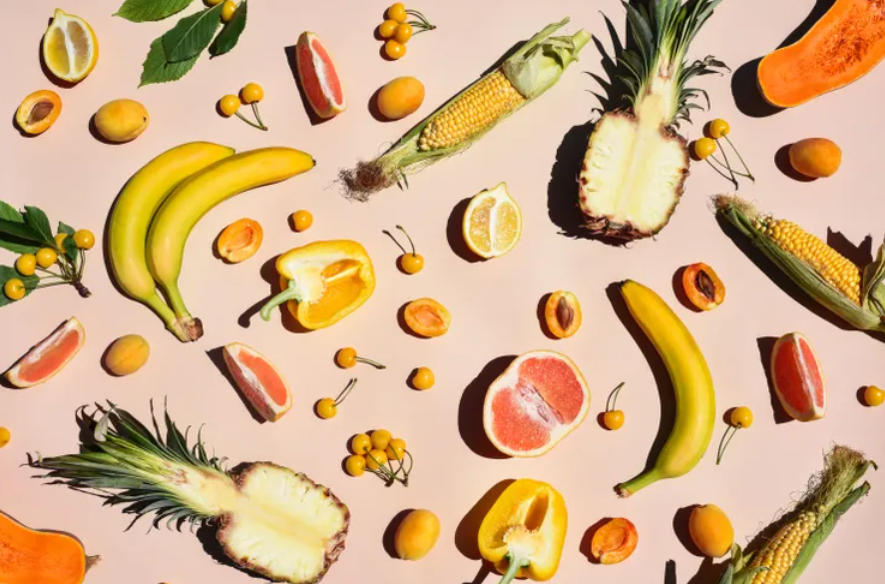
Most of us will spend a third of our lives asleep, so it’s worth making those hours count. There is no shortage of gadgets that promise good sleep: white noise machines, blackout curtains, sleep masks, even mouth tape. But what if the secret to more restful, uninterrupted sleep didn’t come from a device at all, and instead started with what’s on your plate?
A recent study published in Sleep Health suggests just that. Researchers found that “those who ate more fruits and vegetables — and consumed more complex carbohydrates such as whole grains — experienced longer periods of deep, undisturbed sleep,” the study reads. “People who met the recommendation of five cups of fruits and vegetables per day could see an average 16% improvement in sleep quality compared with those who ate none.” To understand the science behind quality sleep and what’s on your plate, we tapped a health expert for more information.
According to nutritionist Michelle Losh, fruits and vegetables carry many sleep-promoting nutrients. “The major way fruits and vegetables can help promote sleep is through their high melatonin, magnesium, serotonin, and potassium content,” she says. “The presence of these compounds in fruits and vegetables helps in regulating the sleep-wake cycle, soothing both mind and body, making it much easier not just to fall asleep but also to stay asleep.”
And yet, most people still fall short. According to a 2019 report, only about 12% of adults eat the recommended amount of fruit daily, and just 10% meet the vegetable target. The good news? Small changes can add up, with no complicated diet (or sleep tracker) required. Try these simple ways to get more produce in your day, and notice how it improves your sleep.
·Eat them raw or with a favorite dip.
·Toss fruits and vegetables into a smoothie.
·Build a colorful salad.
·Steam and season with salt and pepper.
·Sauté lightly in olive oil.
·Add them to soups or stews.
1.1.What is the author’s main suggestion for improving sleep?
A Buying advanced gadgets.
B Changing eating habits.
C Following complex diets.
D Using sleep trackers.
解析:选B。B细节理解题。作者在开头质疑了使用设备的传统方法,并通过研究和专家观点提出,改善睡眠的秘密可能在于饮食(“what’s on your plate”),因此主要建议是改变饮食习惯。A和D是作者建议重新考虑的方法,C与文中“无需复杂饮食”相悖。故选B。
2.2.How does the author support the claim that diet improves sleep?
A By citing a scientific study.
B By listing popular sleep gadgets.
C By describing personal experiences.
D By explaining physiological mechanisms.
解析:选A。A细节理解题。文章在提出饮食改善睡眠的观点后,立即引用了发表在《Sleep Health》杂志上的一项研究结果(“A recent study published in Sleep Health suggests just that”),并给出了具体数据(16%的改善)来支撑这一主张。B是文中被质疑的对象,C和D在文中没有体现。故选A。
3.3.Why can fruits and vegetables help people stay asleep, according to the nutritionist?
A They replace sleep gadgets.
B They are rich in certain nutrients.
C They are easy to digest.
D They contain a lot of water.
解析:选B。B细节理解题。第三段中营养学家Michelle Losh解释说,水果和蔬菜帮助睡眠的主要方式是富含褪黑素、镁、血清素和钾等营养素,这些化合物有助于调节睡眠-觉醒周期,安抚身心。A是结果而非原因,C和D未在文中被阐述为帮助睡眠的主要原因。故选B。
4.4.What does the underlined phrase “fall short” refer to in the context?
A Not sleeping enough hours.
B Not using the right gadgets.
C Not eating sufficient produce.
D Not understanding the science.
解析:选C。C词义猜测题。fall short所在段落的后续句子立即用数据说明,只有很少比例的成年人达到了每日推荐的水果和蔬菜摄入量。因此,“fall short”在此具体指没有吃足够的水果和蔬菜。A、B、D均与该词所在语境的具体指代不符。故选C。