
西尔万・戈德曼:用四个轮子,解锁购物新可能
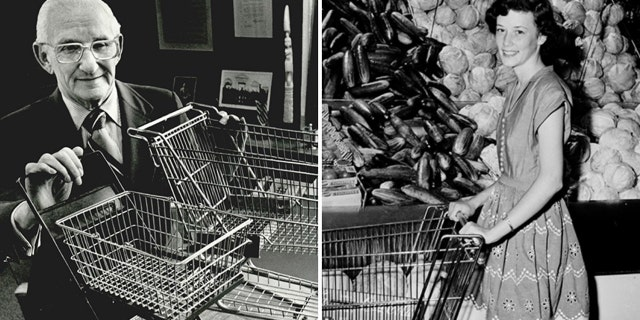
① Sylvan Goldman, a businessman and Oklahoma native, was working for a California grocery wholesaler after World War I when he became fascinated by the new “supermarkets” that put everything under one roof. Still, he noticed a problem: Shoppers were buying only what they could carry in bags and baskets. In 1920, he and his brother, Alfred, brought the supermarket concept back to Oklahoma, where they established their own chain of stores. But Goldman still fretted over the persistent problem of shoppers being limited by their arms.
② Goldman’s first prototype for a shopping cart, in 1936, was wonderfully crude. It consisted of two folding chairs placed seat-to-seat with wheels attached to the bottom and a basket on top. He introduced the first official shopping cart on June 4, 1937, at the Humpty Dumpty grocery store in Oklahoma City.
③ Yet Goldman’s heart sank when he saw that customers wanted nothing to do with the new contraptions. Women who had grown weary of baby strollers refused to push anything around a store again. Men considered the carts emasculating and said wheeling them around was “women’s work,” according to Alyson Atchison, director of galleries and collections at the Science Museum Oklahoma. The museum now houses the first cart Goldman put into public use—which spent its earliest days sitting unloved and unused at the front of his store.
④ Goldman’s solution was elegant, and very simple: He hired attractive models to shop in the store while confidently pushing the carts, showing other shoppers firsthand how convenient and fashionable they could be. Shoppers saw the appeal and began emulating these comely men and women. Other grocers soon clamored for the carts, but many had to be patient: By 1940, store owners looking to buy new shopping carts reportedly faced a seven-year wait list. That same year, Goldman began producing the more familiar nesting cart (following a patent war over the design), which solved the messy problem of what to do with all those carts between customers.
⑤ Food producers began offering larger container sizes in stores, knowing customers could now transport bulky items with ease. Goldman’s humble invention helped create the foundation for today’s retail landscape of vast stores filled with oversize products. As Atchison says, those wheels “changed and innovated shopping forever.”
⑥ And they show no signs of slowing their roll. Today, 20 million to 25 million shopping carts are cruising through America’s retail stores at any given moment, roughly one cart for every 13 Americans.
1.1.What did Sylvan Goldman find about shoppers in supermarkets?
A They preferred traditional markets.
B Their purchase was limited by carrying capacity.
C They disliked self-service stores.
D They shopped frequently in groups.
解析:选B。B细节理解题。段落①明确指出,Goldman注意到shoppers“只购买他们能用袋子和篮子携带的东西”(shoppers were buying only what they could carry),并且他们“被手臂限制”(limited by their arms),因此选项B“他们的购买受携带能力限制”正确。选项A“他们喜欢传统市场”和C“他们不喜欢自助商店”在原文未提及;选项D“他们成群购物”也未涉及。故选B。
2.2.The word “fretted” in paragraph 1 is closest in meaning to ________.
A was ignorant
B predicted
C complained
D was worried
解析:选D。D词义猜测题。根据上下文,Goldman发现了顾客因携带能力有限而购物量少的问题,并且这是一个“persistent problem”(持续存在的问题)。因此,他对此问题的情绪应该是持续的关注和忧虑。故“fretted”与D“was worried”(担忧)意思最接近。A“was ignorant”(不知情)与原文他发现问题矛盾;C“complained”(抱怨)语气过强,且未体现持续性;B“predicted”(预测)与原文描述的已发生问题不符。故选D。
3.3.What can be inferred about customers’ initial response to shopping carts?
A They had psychological concerns.
B They found the carts impractical.
C They feared high costs.
D They desired more options.
解析:选A。A推理判断题。段落③提到,女性因为厌倦婴儿车而拒绝推购物车,男性认为推车“缺乏男子气概”(emasculating),这些反应基于心理因素,因此选项A“他们有心理顾虑”正确。选项B“他们认为购物车不实用”和C“他们担心成本高”在原文未提及;选项D“他们想要更多选择”无依据。故选A。
4.4.How did Goldman address customers’ reluctance to use shopping carts?
A By reducing cart prices.
B By improving cart design immediately.
C By hiring models to demonstrate.
D By advertising in newspapers.
解析:选C。C例证题。段落④说明,Goldman雇佣有吸引力的模特在商店里自信地推购物车购物(hired attractive models to shop... pushing the carts),以展示其便利和时尚,从而吸引顾客模仿,因此选项C“通过雇佣模特演示”正确。选项B“立即改进设计”发生在后来(嵌套式购物车),不是解决最初抵触的方法;选项A“降价”和D“报纸广告”未提及。故选C。
5.5.What is the main impact of Goldman’s invention according to paragraph 5?
A It allowed larger product sizes.
B It revolutionized retail practices.
C It increased store profits.
D It reduced product prices.
解析:选B。B段落大意题。段落⑤强调购物车“为今天零售景观奠定了基础”(helped create the foundation for today’s retail landscape)并“永远改变和创新了购物”(changed and innovated shopping forever),因此选项B“它革命了零售实践”正确。选项A“它允许更大产品尺寸”是具体细节,但不是主要影响;选项C“增加商店利润”和D“降低产品价格”未提及。故选B。