
话说惊蛰:春雷惊百虫,万物始复苏
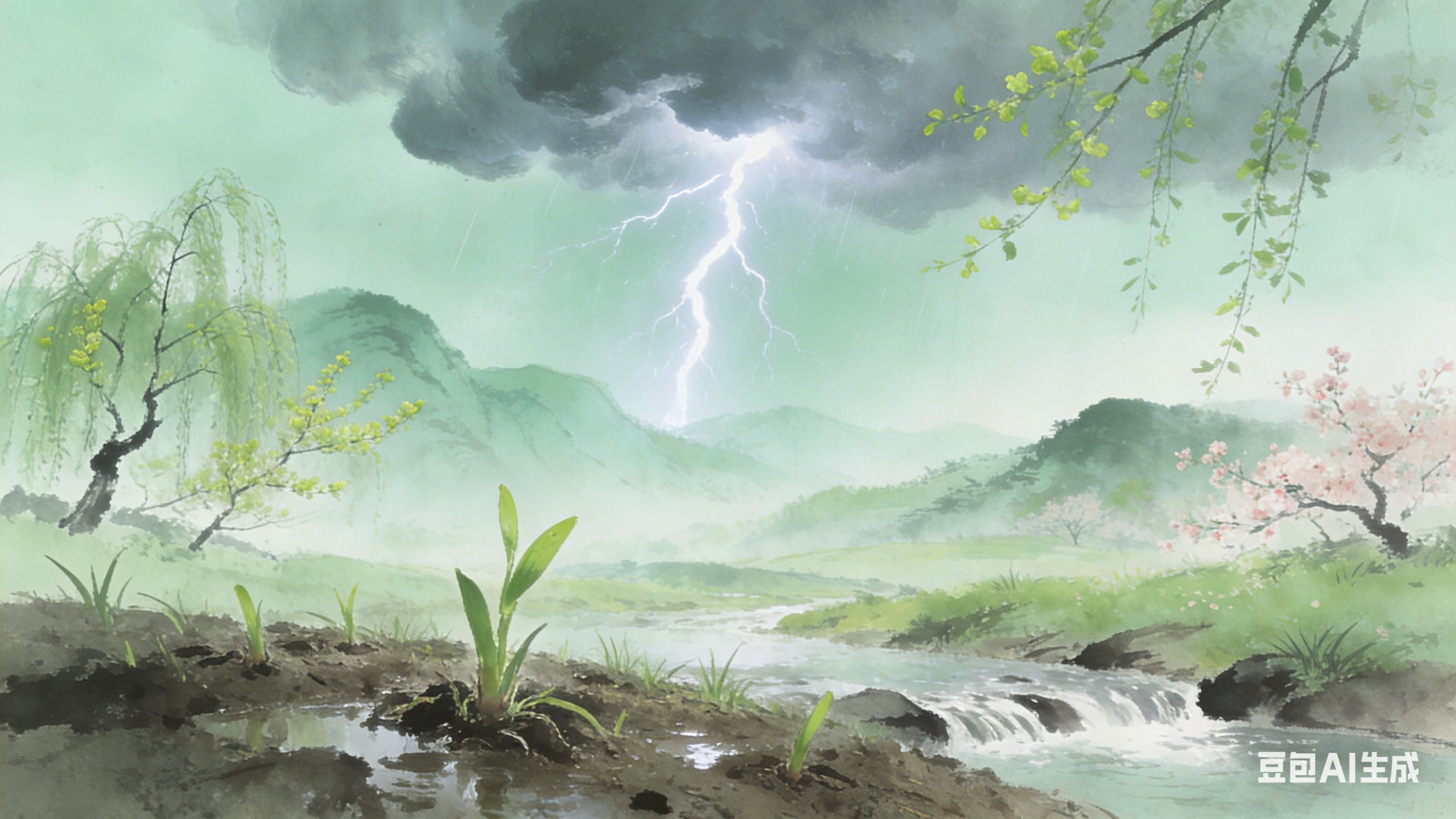
The traditional Chinese solar calendar divides the year into 24 solar terms. Awakening of Insects, the third one, usually falls on March 5, 6 or 7. It brings warmer weather and more rain. Its name tells us that spring thunder wakes animals from their winter sleep, and the earth comes back to life. This term is very important for spring farming.
During Awakening of Insects, spring thunder is often heard. An old saying goes, “If the first spring thunder comes before this term, the weather may be unusual.” Modern science explains that warm wet air rises and meets cold air from the north, causing thunder. Since China is a large country, the first spring thunder arrives at different times in different places.
For farmers, this term marks the start of the busiest season. Temperatures rise quickly, often reaching over 10°C, with more sunshine. An old saying goes, “Once Awakening of Insects comes, spring ploughing never rests.” It shows how important this term is to farmers. They begin to plow the fields and prepare for planting.
Around Awakening of Insects, hibernating animals wake up, and so do fish. They swim from deep water to shallow water to find food and lay eggs. So it’s a great time for fishing. Many people, especially those living in cities, enjoy fishing in the countryside. They can relax by the lake and enjoy the beautiful spring. For them, fishing is a relaxing outdoor activity.
1.1. What does Awakening of Insects mainly bring?
A Cold wind.
B Warm weather.
C Heavy snow.
D Bright moon.
解析:选B。B细节理解题。根据第一段的“It brings warmer weather and more rain.”可知,惊蛰带来更温暖的天气和更多降雨。A、C、D选项文中均未提及。故选B。
2.2. What causes spring thunder according to modern science?
A Warm air meets cold air.
B Spring thunder wakes animals.
C The old saying’s prediction.
D Different times in China.
解析:选A。A细节理解题。第二段中的“Modern science explains that warm wet air rises and meets cold air from the north, causing thunder.”现代科学解释明确指出,温暖潮湿的空气上升并与北方的冷空气相遇,从而产生春雷。选项A“暖空气与冷空气相遇”是对原文原因部分的同义改写。B项“春雷唤醒动物”是第一段提到的节气名称含义,并非科学解释的原因;C项“谚语的预测”是古人的经验总结,而非现代科学的解释;D项“中国不同地区时间不同”是春雷出现时间差异的现象,并非春雷产生的原因。故选A。
3.3. What do farmers do during Awakening of Insects?
A Stop working.
B Plant young trees.
C Prepare the fields.
D Catch more fish.
解析:选C。C细节理解题。第三段的“They begin to plow the fields and prepare for planting.”指出农民开始犁地并为播种做准备,可以推断出他们在准备田地。A与原文相反;B文中未提及种树;D是钓鱼活动,与农民无关。故选C。
4.4. What does the underlined words “hibernating animals” most probably mean?
A Animals sleeping in winter.
B Animals living in water.
C Animals living in cities.
D Animals eating grass.
解析:选A。A词义猜测题。第一段提到春雷“wakes animals from their winter sleep”解释惊蛰名称含义时提到春雷唤醒冬眠的动物,第四段再次出现“hibernating animals wake up”,说hibernating animals醒来。结合上下文可知“hibernating animals”指冬眠动物。故选A。
5.5. What is the last paragraph mainly about?
A A Chinese custom.
B A healthy fruit.
C A spring activity.
D A farming tool.
解析:选A。A段落主旨题。最后一段第一句“Eating pears is a popular custom at this time.”点明吃梨是一项流行习俗,整段围绕这一习俗展开,解释吃梨的原因和好处。B、C只是习俗的具体内容,D文中未提及。故选A。