
中国空间站“太空菜园”喜获丰收
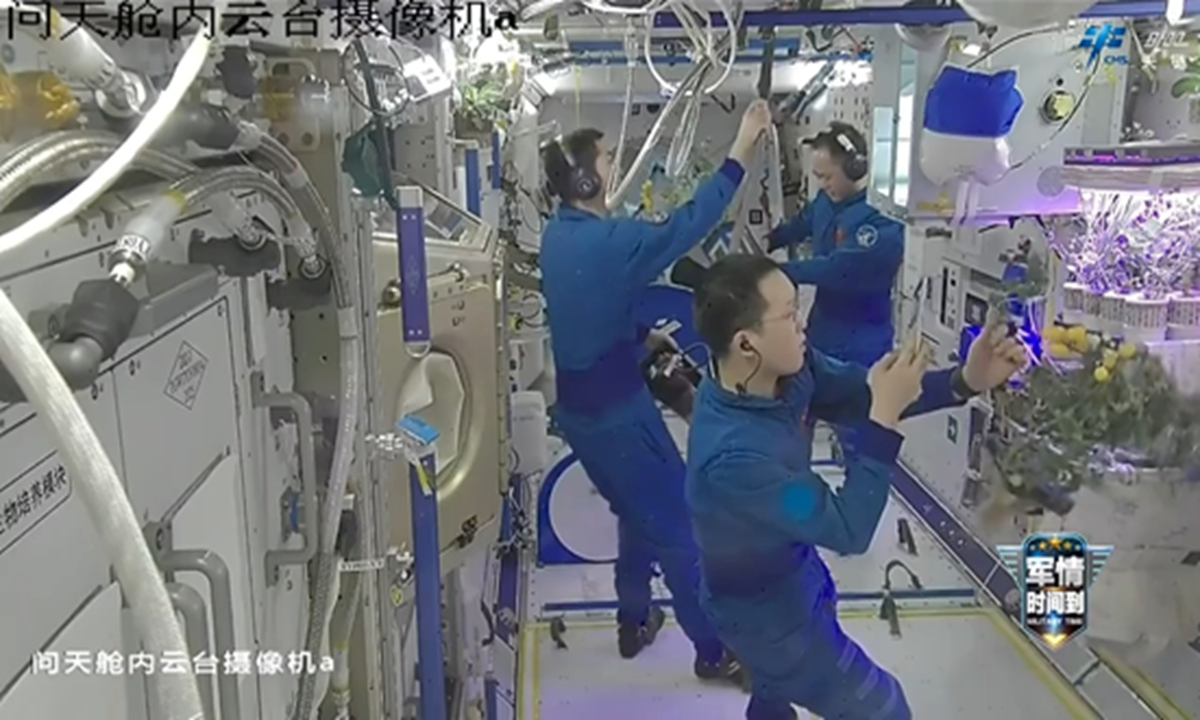
Exciting news comes from China’s Tiangong space station! The Shenzhou-21 crew recently celebrated a special harvest. According to reports from China Central Television, their first crop of “space tomatoes” has successfully ripened, marking a significant step in their space farming mission. This achievement brings fresh food and valuable data to the orbiting laboratory.
The cherry tomatoes were grown inside the station using an advanced method called aeroponics. A video released by state media shows the astronauts carefully picking the bright red fruits in the weightless environment. They then stored the tomato plants and the harvested samples separately for future scientific study on Earth.
This gardening work is more than just a hobby; it’s an important science experiment. By vaporizing (蒸发) water into a fine mist, this system uses water very efficiently compared to traditional methods. The data collected will be vital for planning future long-term missions, where astronauts may need to grow their own fresh food to maintain a healthy diet during deep space exploration.
In addition to tending their “healing corner”, as one astronaut affectionately called the garden, the crew stays very busy with daily tasks. They conduct various other experiments, such as studying materials in microgravity and maintaining the station’s complex life support systems. They also perform regular health checks, including blood tests, to monitor how their bodies adapt to long-term living in space. Ground teams carefully analyze this data to keep the crew healthy and safe throughout their mission.
1.1.What do we know about the “space tomatoes” from the video?
A They were grown in soil.
B They were still unripe.
C They were fully ripe.
D They were kept fresh for study.
解析:选C。C 细节理解题。答案出自文章第二段第二句:“A video released by state media shows the astronauts carefully picking the bright red fruits in the weightless environment.”(官方媒体发布的一段视频显示,宇航员在失重环境中小心翼翼地采摘鲜红色的果实。)“Bright red”是果实成熟的特征。选项C “They were fully ripe”(它们已经完全成熟)与原文描述一致。选项A错误,因为文章提到使用了气培法,没有使用土壤。选项B错误,因为果实是鲜红色的,并非未成熟。选项D是视频拍摄之后宇航员对样本的处理方式,并非视频中直接展现的内容。故选C。
2.2. What can we infer about aeroponics?
A It depends much on soil.
B It wastes much farming time.
C It needs lots of sunlight.
D It helps save plenty of water.
解析:选D。D推理判断题。答案出自文章第三段第二句:“By vaporizing water into a fine mist, this system uses water very efficiently compared to traditional methods.”(通过将水蒸发成细雾,与传统方法相比,该系统非常有效地利用了水资源。)由此可以推断,气培法的主要优势之一是节约用水。选项D “It helps save plenty of water”(它有助于节省大量的水)是对原文“uses water very efficiently”的合理推断。选项A错误,文章明确指出气培法不依赖土壤。选项B和C在文中均未提及。故选D。
3.3. Why does the crew take regular health checks?
A To do experiments on blood.
B To test the life support system.
C To watch their body condition.
D To study materials in space.
解析:选C。C细节理解题。答案出自文章第四段第三句:“They also perform regular health checks, including blood tests, to monitor how their bodies adapt to long-term living in space.”(他们还进行定期健康检查,包括验血,以监测他们的身体如何适应长期的太空生活。)监测身体如何适应,就是观察身体状况。选项C “To watch their body condition”(观察他们的身体状况)是对原文“monitor how their bodies adapt”的同义转述。选项A和D是宇航员进行的其他实验任务,并非定期体检的目的。选项B文中未提及。故选C。
4.4. What can we learn from the crew’s work in space?
A It mainly focuses on farming.
B It helps future space travel.
C It is limited to daily tasks.
D It prevents physical changes.
解析:选B。B推理判断题。答案出自文章最后一段:“The crew’s work with their thriving space garden and many other experiments is helping scientists learn more about living and working in space. Each small step brings people closer to realizing even longer journeys to the moon and Mars in the future.”(宇航员们繁茂的太空花园工作和许多其他实验正在帮助科学家更多地了解在太空中的生活和工作。每一小步都让人们离未来实现更长的月球和火星之旅更近一步。)由此可以推断,宇航员在空间站的工作(包括种植和其他实验)都是为了未来的深空探索做准备。选项B “It helps future space travel”(它有助于未来的太空旅行)准确概括了这一点。选项A错误,因为种植只是实验的一部分,并非主要工作。选项C错误,他们的工作远不止日常任务。选项D错误,文中提到定期体检是为了监测身体变化,但并未说他们的工作能“防止”这些变化。故选B。