
二月二龙抬头:迎春雨,启新程
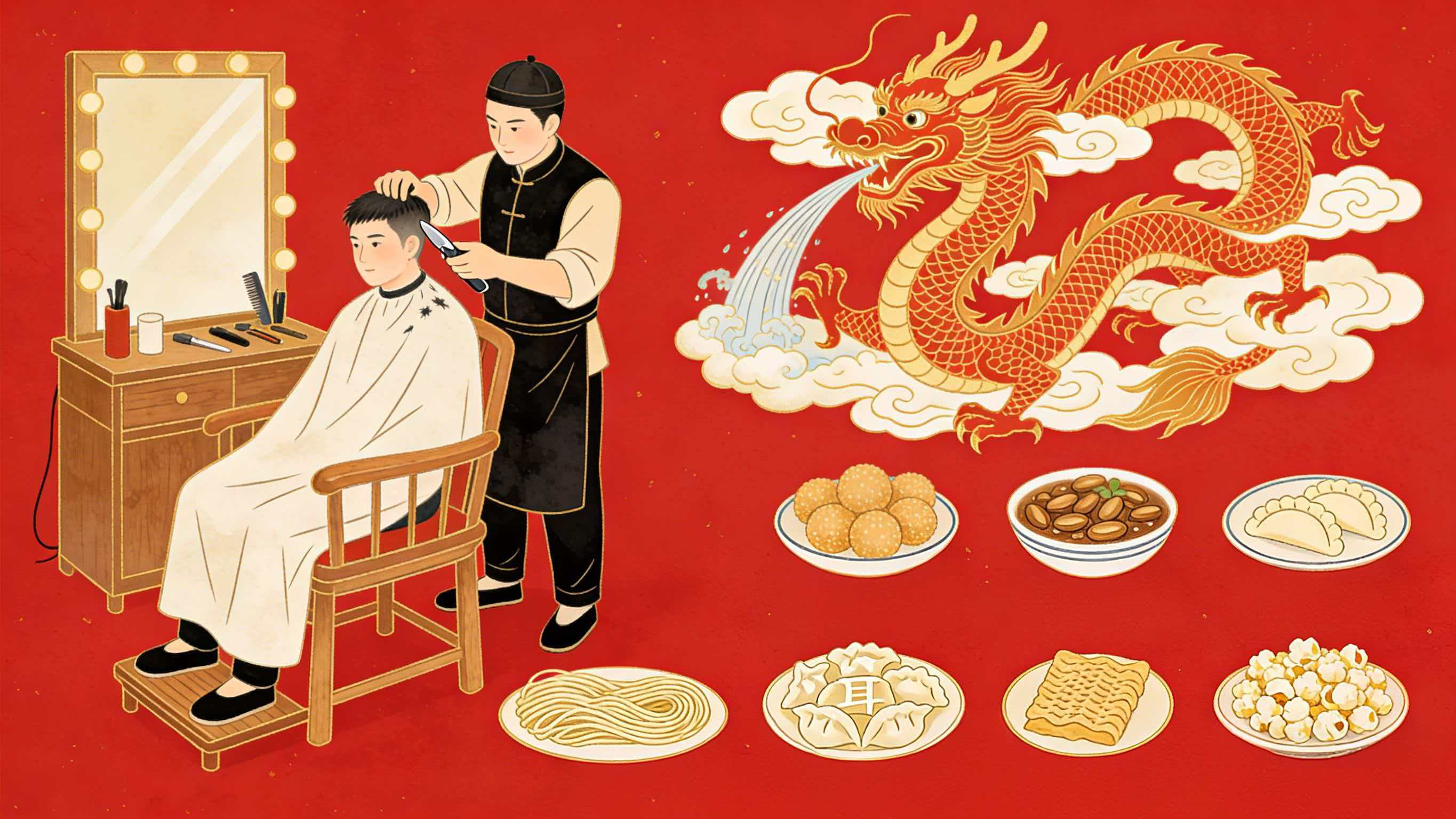
The Longtaitou Festival, also known as the Dragon-Head-Raising Festival, is a traditional Chinese celebration. It falls on the second day of the second lunar month each year. The festival celebrates the start of spring and the beginning of farming.
In ancient times, people believed that after this day, there would be more rain. This is because the Dragon King, who brings the rain, wakes up from his winter sleep. There is a famous saying: “Er yue er, long tai tou.” It means, “On the second day of the second month, the dragon lifts his head.”
The most popular tradition during Longtaitou is getting a haircut. Some people think that cutting hair on this day can get rid of bad luck. They believe that getting a haircut in the first lunar month will bring bad luck. There is even an old saying that if you cut your hair in the first month, your uncle may die. Although few people take this seriously today, many still wait until Longtaitou for their first haircut after the Spring Festival.
Food is also important for the celebration. In Fujian, people eat tofu balls to wish for good fortune. In Shandong, fried beans are the traditional snack. In Suzhou, people enjoy chengyao cakes, a sticky rice treat. It is said that eating these cakes on Longtaitou Festival will keep your waist from hurting all year.
1.1. What do we learn about the Longtaitou Festival from Paragraph 1?
A It is a modern festival.
B It is connected with farming.
C It marks the end of spring.
D It lasts for several days.
解析:选B。B细节理解题。根据第一段最后一句“The festival celebrates the start of spring and the beginning of farming.”(这个节日庆祝春天的开始和农耕的开始)可知,龙抬头节与农耕有关。A项“这是一个现代节日”与原文“traditional Chinese celebration”矛盾;C项“它标志着春天的结束”与原文“start of spring”相反;D项“它持续好几天”原文未提及。因此B项正确。
2.2. In Paragraph 2, what does the word “This” refer to?
A More rain coming.
B The festival coming.
C The famous saying.
D The Dragon King’s sleep.
解析:选A。A词意指代题。根据第二段前两句“In ancient times, people believed that after this day, there would be more rain. This is because the Dragon King... wakes up...”可知,“This”指代的是前一句提到的“会有更多雨水”这种现象。B项“节日的到来”不是直接指代对象;C项“那句名言”是后文单独引用的内容;D项“龙王的睡眠”是解释原因的一部分,但不是“This”指代的内容。因此A项正确。
3.3. Why do many people wait to get their first haircut until Longtaitou?
A To protect their uncles.
B To follow an old saying.
C To wake up dragons.
D To avoid bad luck.
解析:选D。D细节理解题。根据第三段“Some people think that cutting hair on this day can get rid of bad luck. They believe that getting a haircut in the first lunar month will bring bad luck.”(一些人认为在这天理发可以消除厄运。他们相信在正月理发会带来坏运气。)可知,人们等到龙抬头才理发是为了避免坏运气。A项“为了保护他们的舅舅”是只是旧时俗语,并非现代人理发的主要原因;B项“为了遵循一个古老的谚语”过于笼统,谚语只是解释了习俗的由来;C项“为了唤醒龙”文中未提及理发与唤醒龙有关。因此D项正确。
4.4. Which of the following food is connected with a part of the dragon’s body?
A Tofu balls in Fujian.
B Fried beans in Shandong.
C Noodles in many places.
D Chengyao cakes in Suzhou.
解析:选C。C细节理解题。根据最后一段“Many foods are given special names about dragons. For example, noodles are called ‘dragon’s beard’...”可知,面条被称为“龙须”,是龙身体的一部分。A项“福建的豆腐丸”、B项“山东的炒豆”、D项“苏州的撑腰糕”虽然都是节日食品,但文中并未提及它们与龙身体部位有关联。因此C项正确。
5.5. What is the main idea of the passage?
A Ways to celebrate spring.
B Special foods for festivals.
C Traditions of Longtaitou.
D Reasons for spring haircuts.
解析:选C。C主旨大意题。文章第一段介绍龙抬头节的时间;第二段讲述其与龙和降雨的传说;第三段介绍理发的传统;第四、五段介绍节日食品。全文围绕龙抬头节的各种传统习俗展开介绍。A项“庆祝春天的方式”过于宽泛,文章主要聚焦一个节日;B项“节日的特殊食品”只是文章的一部分内容,不全面;D项“春天理发的原因”只是文章的一部分内容。因此C项“龙抬头的传统”最能概括全文主旨。