
倒计时300天,长春迎接世界青春力量
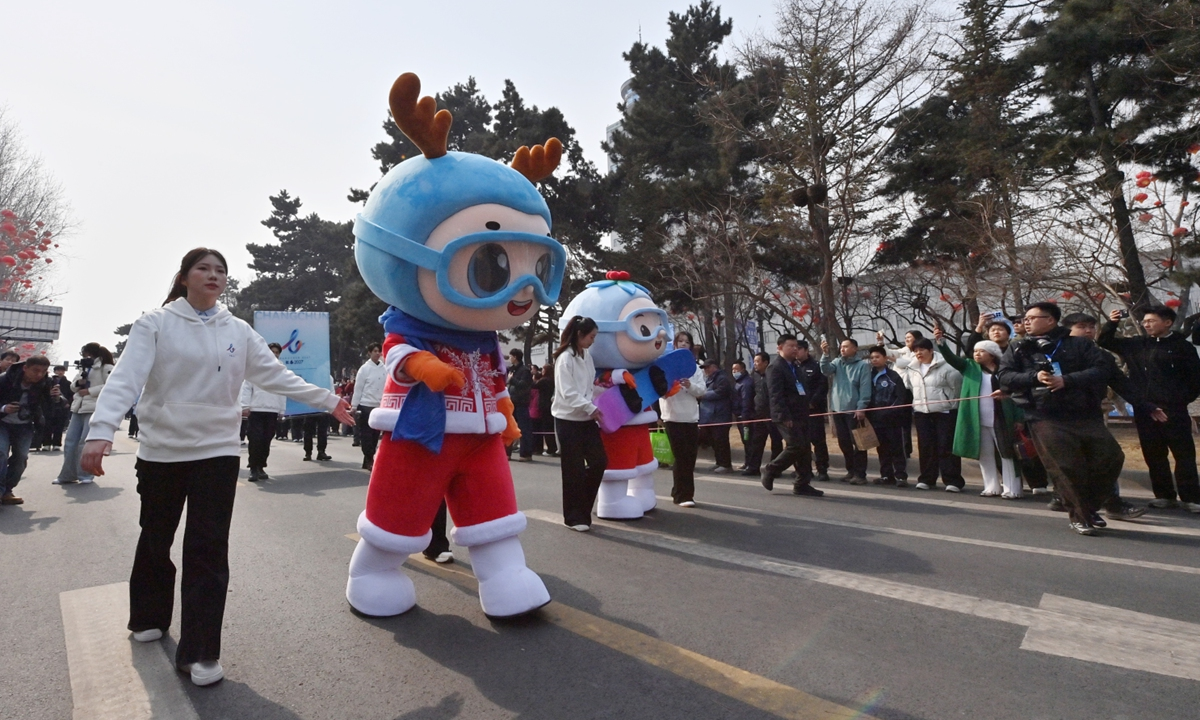
The 2027 FISU Winter Universiade is a global sports event for university athletes. As it draws near, its official emblem, slogan and mascot have been unveiled (公布), marking the start of the 300-day countdown. The Games will be held in Changchun, Jilin Province, from January 15 to 25.
To connect sports with local culture, the emblem combines the cursive (草书的) style of the Chinese character “Chang” (short for Changchun) with the letter “U” from FISU, which stands for “University”. Its simple yet recognizable design uses classic blue and white to reflect the ice and snow culture of Northeast China. The accents of red, purple, orange and yellow add vitality, symbolizing the energy of young athletes.
Besides ice and snow culture, Changchun is also the birthplace of China’s film industry. The emblem’s flowing lines are designed to look like a film reel, honoring the city’s cultural heritage. Named “Chunchang”, it was created by a team from Jilin University of Arts after 27 days of hard work and 176 design proposals.
The Games’ mascots are “Jibing” and “Jixue”. Jibing is modeled after Jilin’s sika deer, with its high antlers (鹿角) representing youthful energy and its red sportswear reflecting the region’s Red Culture — a tribute to its revolutionary history. Jixue is inspired by Changbai Mountain ginseng, a famous local herb that symbolizes lasting vitality. It wears a traditional cotton-padded jacket and orange gloves, which stand for a good harvest.
1.1.What do the bright colors in the emblem mainly represent?
A Film culture.
B Athletes’ energy.
C Ice and snow.
D The city’s name.
解析:选B。B 细节理解题。根据文章第二段最后一句“The accents of red, purple, orange and yellow add vitality, symbolizing the energy of young athletes.”可知,会徽中点缀的红色、紫色、橙色和黄色增添了活力,象征着年轻运动员的能量。因此,明亮色彩主要代表运动员的能量,对应选项B。其他选项在文中虽有提及,但并非这些亮色所主要象征的内容。故选B。
2.2. What do the emblem’s smooth lines reflect?
A Local ice traditions.
B Young college athletes.
C The city’s film heritage.
D Rich natural resources.
解析:选C。C 细节理解题。根据文章第三段第二句“The emblem’s flowing lines are designed to look like a film reel, honoring the city’s cultural heritage.”以及前文提到的“Changchun is also the birthplace of China’s film industry”可知,会徽流畅的线条被设计成胶片的样子,以此纪念这座城市(长春)的电影文化遗产。因此,线条反映的是城市的电影传统,对应选项C。其他选项在文中未与“smooth lines”建立直接联系。故选C。
3.3. What can be inferred about the two mascots?
A They center on modern sports.
B They show local features.
C They use few bright colors.
D They come from film roles.
解析:选B。B 推理判断题。根据文章第四段,吉祥物“吉冰”以吉林梅花鹿为原型,体现红色文化;“吉雪”以长白山人参为灵感,穿着传统棉袄。两者都取材于吉林省的自然、文化与历史元素,展示了鲜明的地方特色。因此,可以推断出它们体现了当地特色,对应选项B。其他选项中,“现代体育”(A)、“明亮颜色少”(C)和“来自电影角色”(D)均与文中信息不符或无法推断得出。故选B。
4.4. What is an expected result of the event?
A Stress only competitions.
B Cut cultural exchanges.
C Increase global participation.
D Develop winter sports.
解析:选D。D 细节理解题。根据文章最后一段倒数第二句“The Games are expected to promote winter sports in China and strengthen cultural exchanges among young people around the world.”可知,该赛事预期会推动中国冬季运动的发展,并加强全球青年之间的文化交流。因此,发展冬季运动是明确提到的预期结果之一,对应选项D。其他选项中,“只强调比赛”(A)与原文不符,“减少文化交流”(B)与原文相反,“增加全球参与”(C)虽合理但文中未直接提及。故选D。