
不惧险地!智能机器人勇闯险境守绿林
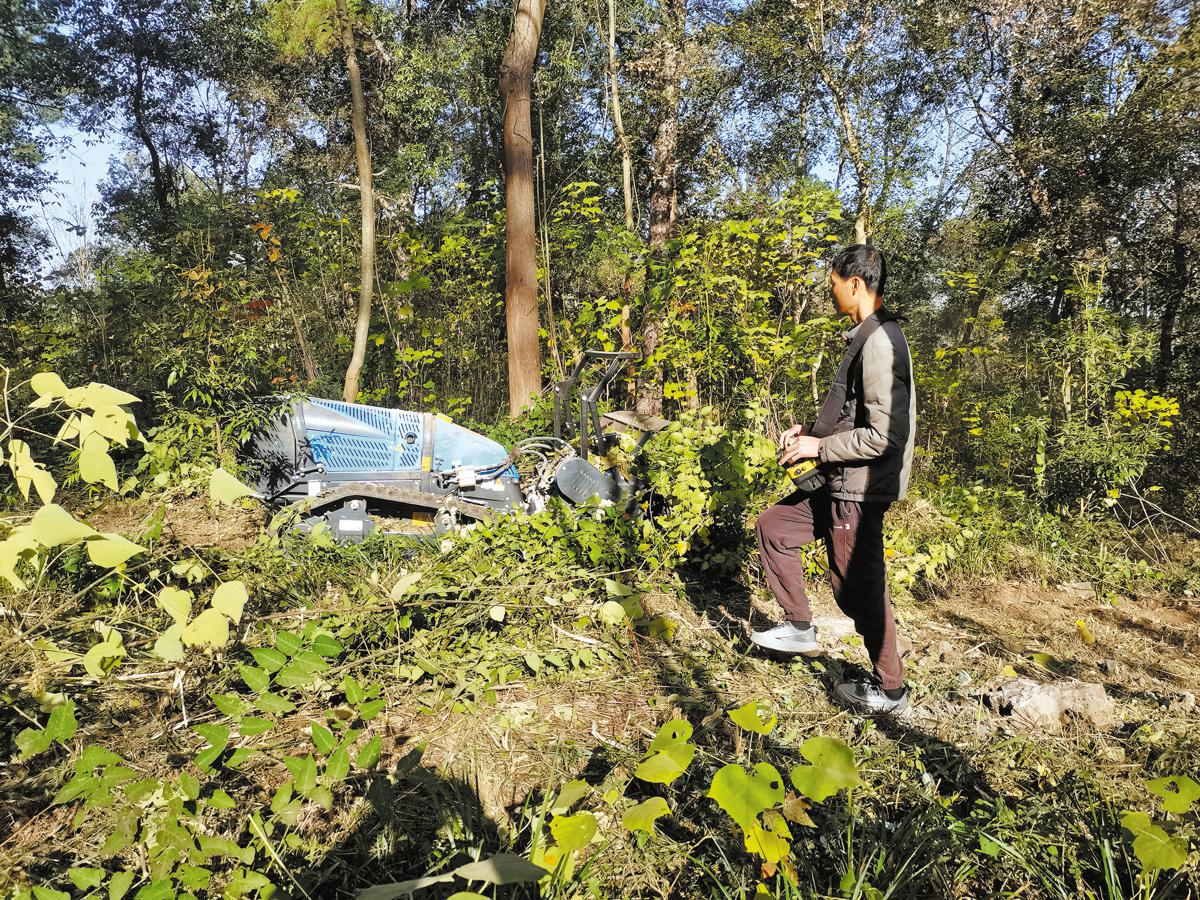
Hubei has taken a big step forward in smart ecological protection by using its first remote-controlled robot for forest fire prevention. This modern technology is helping to reform traditional forestry management and protect the environment more effectively.
The robot was put into use last November in Jingshan City. It was designed for difficult forest environments and performs well on rough land. It can work safely on slopes as steep as 60 degrees. People can control it from 150 meters away, keeping workers out of danger.
The machine is very useful for building firebreaks. Its high-strength steel cutting tool can easily cut down trees 15 to 20 centimeters thick and dig soil quickly. It can clear roads for firefighters and knock down burning trees. It can work nonstop for eight hours, greatly improving work safety and efficiency. In the past, workers used simple tools to dig firebreaks, which was slow and dangerous. Now, robots can do the job instead, so people no longer need to risk their lives near fires.
The Taizi Mountain area has thick forests and difficult landforms (地形), making fire fighting very challenging. At present, two robots are working there, and more will be used later. The local government is also holding training courses with the factory to teach workers how to use the robots well.
1.1. What is the main use of the robot?
A To prevent forest fires.
B To cut down trees.
C To train young workers.
D To carry heavy tools.
解析:选A。A 细节理解题。文章第一段第一句明确提到 “Hubei has taken a big step forward in smart ecological protection by using its first remote-controlled robot for forest fire prevention.”,直接点明这款机器人的主要用途是森林防火。B 选项砍树只是机器人的功能之一,并非主要用途;C 选项培训工人、D 选项搬运工具在文中均未提及,因此选 A。
2.2. How far can people control the robot?
A 100 meters away.
B 150 meters away.
C 200 meters away.
D 250 meters away.
解析:选B。B 细节理解题。根据第二段最后一句 “People can control it from 150 meters away, keeping workers out of danger.”,可直接找到人们可在 150 米外操控该机器人的信息,A、C、D 选项的距离均与原文不符,所以选 B。
3.3. How does the robot help build firebreaks?
A By watering the ground.
B By sending warnings.
C By cutting and digging.
D By flying in the sky.
解析:选C。C 细节理解题。第三段第二句提到 “Its high-strength steel cutting tool can easily cut down trees 15 to 20 centimeters thick and dig soil quickly.”,说明机器人通过砍伐树木、挖掘泥土来修建防火带。A 选项浇水、B 选项发送警报、D 选项空中飞行均不是其修建防火带的方式,因此选 C。
4.4. What can we learn from Paragraph 4?
A The robots need a lot of training.
B More robots will be used later.
C Fire fighting there is quite easy.
D The factory is far from the area.
解析:选B。B 细节理解题。第四段第二句明确指出 “At present, two robots are working there, and more will be used later.”,由此可知后续该地区会投入更多机器人。A 选项文中是政府培训工人使用机器人,而非机器人需要大量训练;C 选项与原文 “making fire fighting very challenging”(灭火极具挑战)相悖;D 选项工厂距离远近文中未提及,故选 B。
5.5. What is the best title for the passage?
A Hubei’s Forest Parks.
B Robots in Dangerous Jobs.
C The History of Firebreaks.
D Smart Ways to Fight Fires.
解析:选D。D 主旨大意题。全文围绕湖北运用森林防火机器人、无人机、卫星遥感等智能科技开展森林防火工作展开,介绍了多种智能化防火灭火方式。A 选项湖北森林公园、C 选项防火带历史均与文章核心无关;B 选项危险工作中的机器人范围过大,未突出森林防火主题;D 选项 “智能灭火方式” 精准概括文章主旨,因此选 D。