
野火肆虐后,是谁在悄悄修复大地?
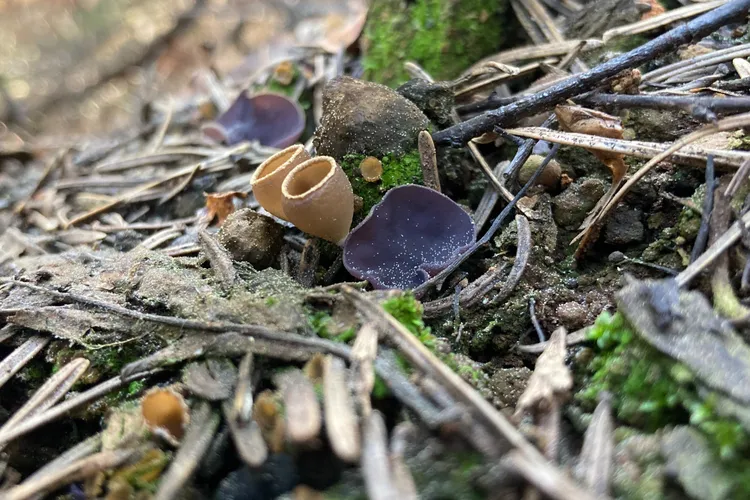
When people think of fungi, most tend to picture mushrooms. However, the fungal kingdom is much more than that. There are about 2.2 to 3.8 million species of fungi on Earth. They serve as decomposers and nutrient recyclers, which are essential to life.
Some fungi grow well after forest fires. These are called fire-loving fungi. While many living things die in a fire, these fungi have a rise in quantity. They grow on burned soil and wood, often appearing as brightly colored patches for a few weeks. They break down charcoal (木炭) and release nutrients that plants can use. They also help improve soil structure and allow water to pass through.
To understand how these fungi survive and grow after fires, a group of scientists studied their genes. They collected 18 species of fire-loving fungi from seven burned areas. They grew these fungi in the lab and observed their growth. Some fungi were exposed to charcoal. The scientists then identified which genes became active. They found that the fungi used different ways to get the genes needed to break down charcoal.
One way is gene duplication, which helps the fungi produce more of the enzymes (酶) that break down charcoal. Another way is through reproduction, which can create new traits. The most surprising way is called horizontal gene transfer. This happens when genes are passed between different species. In this case, the scientists found that some genes came from bacteria. This kind of gene transfer between different kingdoms is very rare.
1.1.What happens to fire-loving fungi after a wildfire?
A They die immediately.
B They increase in number.
C They become less active.
D They lose their bright color.
解析:选B。B细节理解题。文章第二段明确指出“While many living things die in a fire, these fungi have a rise in quantity.”,说明火后真菌的数量会增加。因此B项正确。A项“They die immediately.”与原文“have a rise in quantity”矛盾,属于反向干扰。C项“They become less active.”文中未提及活动性变化,属于无中生有。D项“They lose their bright color.”文中提到它们呈现“brightly colored patches”,未说会失去颜色,属于曲解文意。故选B。
2.2.How did scientists conduct the research?
A By observing fungi in the wild.
B By comparing different fungal species.
C By studying fungi in unburned forests.
D By analyzing fungi from burned areas.
解析:选D。D细节理解题。第三段明确写道“They collected 18 species of fire-loving fungi from seven burned areas.”,说明科学家是从燃烧区域采集真菌进行研究。因此D项正确。A项“By observing fungi in the wild.”虽然研究中包含观察,但核心方法是从燃烧区采集并在实验室分析,过于片面。B项“By comparing different fungal species.”文中未体现物种间的比较,属于无中生有。C项“By studying fungi in unburned forests.”文中未涉及未燃烧森林,属于偏离原文。故选D。
3.3.What can we infer about horizontal gene transfer?
A It only happens within the same species.
B It is a common way for fungi to grow.
C It involves genes from different species.
D It was discovered by scientists in lab.
解析:选C。C推理判断题。根据文章第四段的“This happens when genes are passed between different species... some genes came from bacteria.”可知,水平基因转移发生在不同物种之间,甚至涉及不同生物界(真菌与细菌)的基因传递,因此可推断它涉及来自不同物种的基因。C项正确。A项“It only happens within the same species.”与原文“between different species”直接相反。 B项“It is a common way for fungi to grow.”文中明确说这种跨界基因转移“is very rare”,属于事实错误。D项“It was discovered by scientists in lab.”文中未提及该现象是否在实验室中被首次发现,属于无依据推断。故选C。
4.4.What is the main purpose of the last paragraph?
A To warn about the risks of wildfires.
B To explain how fungi cause wildfires.
C To stress the value of fire-loving fungi.
D To describe the process of forest recovery.
解析:选C。C主旨大意题。最后一段主要说明火后真菌在森林恢复中的作用,如“break down harmful compounds”“prevent soil erosion”“support the growth of new plants”,并强调“they play an important role”,整体意在强调火后真菌的价值。因此C项正确。A项“To warn about the risks of wildfires.”文中未提及对野火风险的警示,属于偏离主题。B项“To explain how fungi cause wildfires.”文中未说真菌引发野火,属于因果颠倒。D项“To describe the process of forest recovery.”虽然涉及森林恢复,但重点不是描述过程,而是突出真菌在其中的作用,属于以偏概全。故选C。