
盐碱地也能种出宝!神奇植物海篷子有多厉害
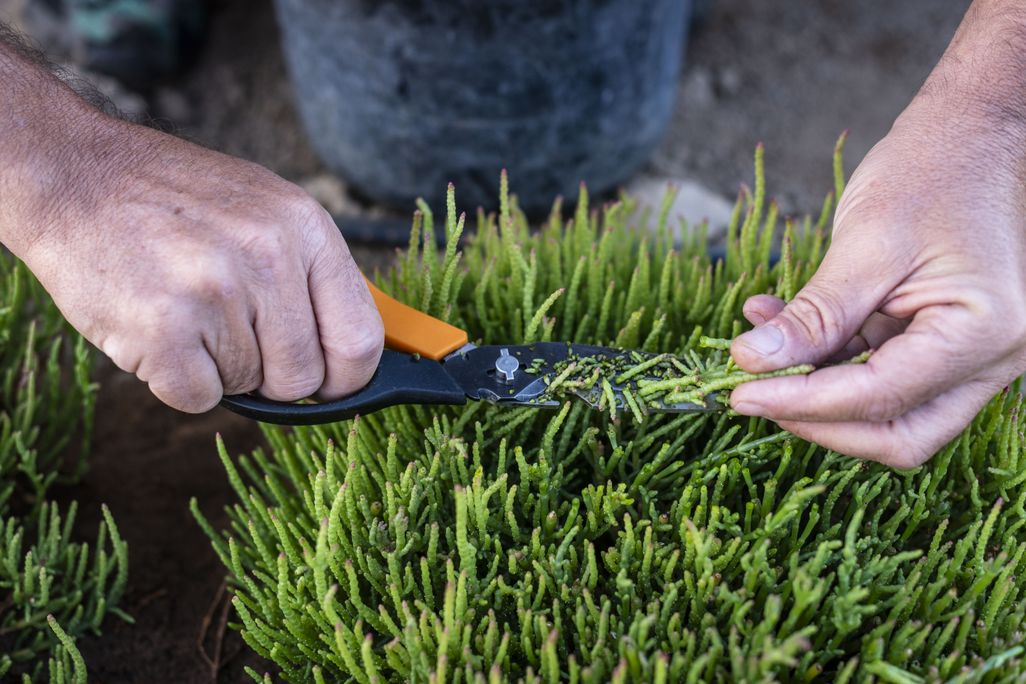
Manuel Díaz Cárdenas is a farmer in southern Spain. He grows a special plant called Salicornia in a salt marsh near the sea. Using only a pair of scissors, he cuts the young stems and sells them to local restaurants. His company, Marsh Foods, produces about 8,800 pounds of it each year.
Salicornia is a plant that grows naturally in places with much salt, such as salt marshes. While most crops die or grow poorly in salty soil, Salicornia thrives. Farmers in countries such as China, Mexico, the Netherlands, and Israel have begun growing it. Researchers see it as a nature-based solution to challenges such as land degradation and saltwater intrusion — problems that are getting worse as the climate changes.
The plant is also very healthy. It is rich in protein, vitamins, and minerals. Scientists are studying its medical uses. Some studies show that it may help lower blood pressure and lower the risk of stroke (中风). It also has anti-inflammatory and antioxidant properties. The plant can even be used to make skin cream and other products.
Farming Salicornia has environmental benefits. It can grow in deserts and along coastlines, where normal crops cannot. It helps protect the land from being washed away. It can also take in salt from the soil. Because it grows in such difficult places, farmers do not need to use many chemicals to protect it.
1.1. How does the writer begin the passage?
A By describing a farmer’s daily work.
B By explaining how to cook a plant.
C By listing problems of farming.
D By comparing different countries.
解析:选A。A推理判断题。文章开篇以西班牙农民Manuel Díaz Cárdenas在盐沼种植Salicornia(海篷子)、用剪刀收割、卖给餐馆等具体事例展开,通过描述一位农民的日常工作来自然引入话题。原文第一段:“Manuel Díaz Cárdenas is a farmer... Using only a pair of scissors, he cuts the young stems and sells them to local restaurants.”选项B“解释如何烹饪植物”未出现;选项C“列举农业问题”出现在后文;选项D“比较不同国家”出现在第二段。故选A。
2.2. What does the word “thrives” in paragraph 2 most likely mean?
A Dies easily.
B Grows slowly.
C Grows well.
D Needs care.
解析:选C。C词义猜测题。第二段将Salicornia与大多数作物进行对比——大多数作物在盐碱地会“die or grow poorly”(死亡或生长不良),而Salicornia则“thrives”,因此词义应为“生长旺盛”。选项A“容易死亡”、B“生长缓慢”、D“需要照料”均不符合上下文。故选C。
3.3. What is mainly talked about in Paragraph 3?
A Salicornia’s medical value.
B Salicornia’s growing places.
C Salicornia’s planting ways.
D Salicornia’s big harvest.
解析:选A。A段落大意题。第三段主要讲Salicornia的营养成分、医疗功效以及相关产品开发。原文“The plant is also very healthy. It is rich in protein… Scientists are studying its medical uses… It can even be used to make skin cream.”核心内容是药用价值。选项B“生长地点”、C“种植方式”、D“大丰收”均未在本段涉及。故选A。
4.4. How does Salicornia help the environment?
A It uses many chemicals.
B It needs a lot of fresh water.
C It stops land from being lost.
D It makes the soil more salty.
解析:选C。C细节理解题。第四段的“It helps protect the land from being washed away.”明确指出Salicornia能保护土地免受侵蚀。选项C“阻止水土流失”与此一致。选项A与原文“farmers do not need to use many chemicals to protect it”(不需要施肥)相反;选项B与原文“grows naturally in places with much salt”(在盐碱地生长)矛盾;选项D与原文“It can also take in salt from the soil.”(它还能从土壤中吸收盐分)相反。故选C。
5.5. What does the writer try to convey in the last paragraph?
A The problems are too serious to solve.
B The plant is still worth growing.
C Cooking is the only way to solve problems.
D Farmers should stop growing this plant.
解析:选B。B观点态度题。第五段先指出种植Salicornia面临的挑战(种子对盐敏感、含有草酸),但随后说明这些问题都可以解决——通过控制盐度和烹饪去除草酸。作者这样安排内容,暗示尽管存在困难,这种植物仍然值得种植和食用。选项A“问题严重到无法解决”与文中提供解决方案矛盾;选项C“烹饪是解决问题的唯一方法”过于绝对,种子萌发问题靠控制盐度而非烹饪;选项D“农民应停止种植”与全文主旨相反。故选B。