
太酷了!北京风筝节惊现机器人放风筝
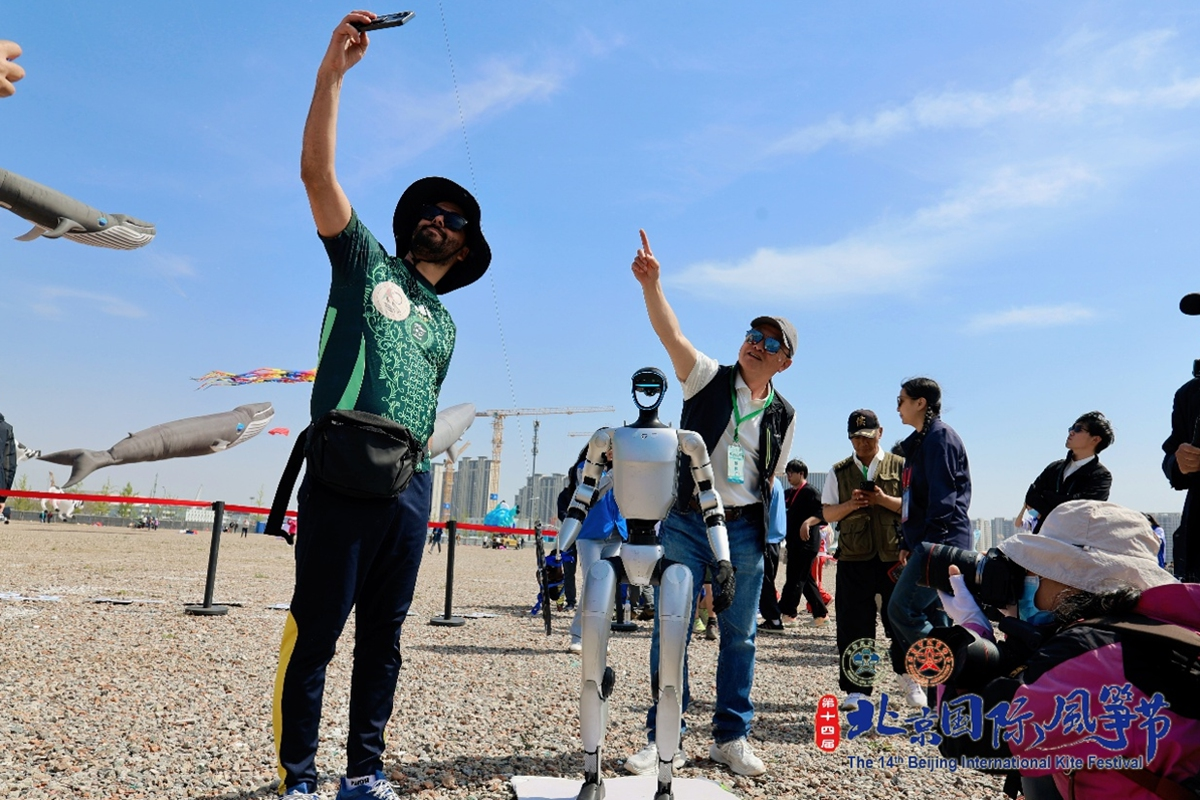
A robot flying a kite became the star of the 14th Beijing International Kite Festival.
The two-day event was held at Beijing Garden Expo Park. Fifteen teams from home and abroad took part in eight competitions, including dragon-shaped and hard-winged kites. Teams from the US, Russia, France, and Tunisia also gave shows of soft kites and sport kites.
One of the most exciting moments was when a robot held a kite string and moved up and down after a coach launched the kite. The 20-minute show attracted many visitors who crowded around to take photos. Wang Bo, a local sports official, said, “Adding technology to traditional events is a new trend. We want to explore new forms of cultural and sports activities.”
However, the robot did not walk as planned. The ground was too rough and uneven, and the wind was unstable (不稳定的). So the robot had to stay in one place. Still, the trial was a success in getting people’s attention. “It created the first connection between traditional folklore (民俗) and modern technology,” Wang said.
The festival also provided fun activities like kite-making workshops, family classes, calligraphy shows, and DIY kite activities for students. Serine, a student from Tunisia, said she enjoyed the event. “I’ve never seen so many large kites. I also made many new friends here,” she told reporters.
1.1.Where was the kite festival held?
A In a park.
B At a school.
C In a stadium.
D At a square.
解析:选A。A细节理解题。根据文章第二段的“The two-day event was held at Beijing Garden Expo Park.”可知,风筝节在北京园博园举办,园博园属于公园,因此正确答案为A。B项“在学校”、C项“在体育场”、D项“在广场”在原文中均未提及。故选A。
2.2. What did the robot do at the festival?
A It launched the kite.
B It held the kite string.
C It made a kite by hand.
D It took photos for visitors.
解析:选B。B细节理解题。文章第三段首句明确描述“when a robot held a kite string and moved up and down after a coach launched the kite”,即机器人握住风筝线,在教练放飞风筝后上下移动。A项“放飞风筝”是教练完成的动作;C项“手工制作风筝”是节日中的DIY活动,并非机器人所为;D项“为游客拍照”是游客自己的行为。因此B项正确。
3.3. Why couldn’t the robot walk as planned?
A It was badly broken.
B The wind was too strong.
C The ground was poor.
D It was too heavy to move.
解析:选C。C细节理解题。根据第四段前两句“However, the robot did not walk as planned. The ground was too rough and uneven, and the wind was unstable.”可知,机器人未能按计划行走的原因是地面粗糙不平且风势不稳。选项C“地面状况不佳”准确对应了第一个原因。A项“严重损坏”和D项“太重无法移动”在文中未提及;B项“风太大”与原文“风不稳定”不符,且文中并未强调风力过强。因此C为正确答案。故选C。
4.4. What can we know about Serine?
A She knew no one there.
B She came from China.
C She disliked the kites.
D She had a good time.
解析:选D。D推理判断题。第五段描述了Serine的言行,她说“I’ve never seen so many large kites. I also made many new friends here.”,由此可推断她在活动中非常开心,享受了乐趣,因此D项正确。A项“她在那里谁也不认识”与“made many new friends”相悖;B项“她来自中国”错误,文中明确说她是“from Tunisia”;C项“她不喜欢风筝”与她对巨型风筝的惊叹完全相反。故选D。
5.5. What does the writer think of the robot trial?
A It was a total failure.
B It was a waste of time.
C It was not worth doing.
D It was a meaningful try.
解析:选D。D观点态度题。作者在第四段评价“the trial was a success in getting people’s attention”,并在最后一段总结“the robot kite flyer showed that tradition and technology can work together in new and exciting ways”,可见作者认为这次尝试虽然遇到了一些挑战,但意义非凡、富有价值。A项“完全失败”、B项“浪费时间”、C项“不值得做”均为负面评价,与作者态度截然相反。因此D项“这是一次有意义的尝试”正确反映了作者观点。故选D。