
太阳能反应器变废为宝,塑料垃圾制氢成功(语法填空)
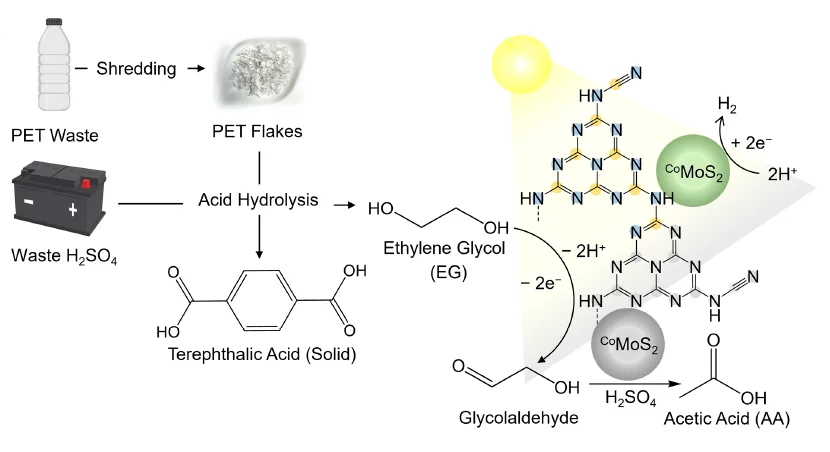
Scientists at the University of Cambridge have created a special reactor. It uses sunlight ___1___ (turn) plastic waste and old battery acid into clean hydrogen. This is good news for ___2___ environment.
Every year, the world produces about 450 million tons of plastic. Only a small part of it ___3___ (recycle). Most plastic ends up in landfills or the ocean. Finding a ___4___ (good) way to deal with plastic waste is very important.
The new reactor works in two simple steps. First, the plastic is ___5___ (break) down by acid from used car batteries. This acid is usually dangerous and hard to deal with, ___6___ here it becomes useful. It helps to cut the long plastic molecules (分子) into smaller pieces. Second, a special powder called “catalyst (催化剂)” is added. When sunlight shines on the mixture, the catalyst helps turn one of the plastic pieces into hydrogen gas. Hydrogen is a clean fuel that only ___7___ (produce) water when burned.
The best part is that the catalyst does not use any expensive metals. It is cheap and can work for a long time — over 260 hours in the lab without ___8___ (stop). Also, the process creates other useful chemicals, like acetic acid (the main part of vinegar) and TPA, ___9___ can be sold. These byproducts (副产品) could help the recycling plant make money.
“We are not saying this will solve the whole plastic problem,” said Dr. Erwin Reisner, the leader of the study. “But it shows that waste can become a valuable resource. Using sunlight and thrown-away battery acid to get clean energy is a very ___10___ (promise) idea.”
The team is now working to make the technology larger so it can be used in the real world. If successful, your old drink bottle might one day help power a clean-energy car.
1.1.
A
B
C
D
解析:选to turn。to turn 考查非谓语动词。use sth. to do sth.为固定结构,不定式作目的状语。
2.2.
A
B
C
D
解析:选the。the 考查冠词。the environment为固定表达,定冠词用于表示独一无二的自然事物。
3.3.
A
B
C
D
解析:选is recycled。is recycled 考查时态和语态。主语it指代塑料,与“回收”为被动关系,用一般现在时被动语态。
4.4.
A
B
C
D
解析:选better。better 考查形容词比较级。根据语境“寻找一种更好的方法”,暗含比较含义,用good的比较级。
5.5.
A
B
C
D
解析:选broken。broken 考查被动语态。be broken down意为“被分解”,break的过去分词为broken。
6.6.
A
B
C
D
解析:选but。but 考查连词。前后分句为转折关系:“这种酸通常危险难处理”与“在这里变得有用”之间用but连接。
7.7.
A
B
C
D
解析:选produces。produces 考查主谓一致。定语从句先行词fuel为单数,一般现在时谓语用第三人称单数。
8.8.
A
B
C
D
解析:选stopping。stopping 考查非谓语动词(动名词)。介词without后接动名词作宾语,without stopping意为“不停歇地”。
9.9.
A
B
C
D
解析:选which。which 考查非限制性定语从句关系词。先行词为other useful chemicals(指物),逗号后用which引导定语从句。
10.10.
A
B
C
D
解析:选promising。promising 考查词性转换。修饰名词idea需用形容词,promise的形容词形式为promising(有希望的)。