
拍照比个“V”,指纹就泄露了?
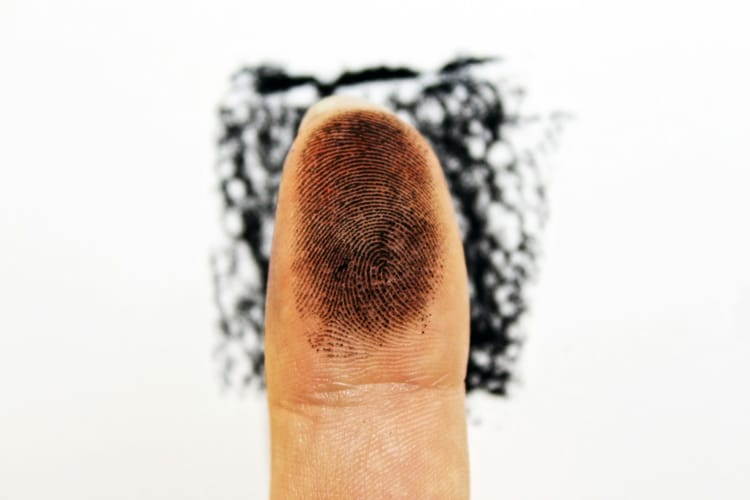
The “V” hand gesture, with the index and middle fingers pointing outward, has long been recognized as a symbol of victory or peace in popular culture. Recently, however, security experts have warned that this common gesture may bring unexpected risks. With the rapid development of high-resolution cameras and advanced AI software, posting a “V”-sign selfie online could expose one’s fingerprints and potentially endanger biometric (生物统计的) security systems.
Last month, Chinese security expert Li Chang demonstrated this risk on a reality show. Using a celebrity’s selfie as an example, he revealed how clearly fingers can be captured in a “V”-sign photo, putting personal biometric data at risk. Li explained that in close-range photos taken within 1.5 meters, there is a high probability of fully extracting (提取) fingerprint information, making selfies particularly dangerous. Even at a distance of three meters, roughly half of a person’s fingerprints can still be recovered with the help of AI software. During the show, Li used photo editing tools and AI to turn blurry, barely visible fingerprint lines into highly detailed images, which shocked the audience.
While Li’s demonstration quickly spread on social media and raised widespread concerns about privacy leaks, some experts noted that stealing and using fingerprints to break through biometric security is not straightforward. Factors such as lighting conditions, camera focus, and image clarity all influence the fingerprint extraction process. Moreover, thieves typically need multiple clear photos of the same person to make an accurate match.
For those who still wish to use the V-sign but want to protect their biometric data, Li offered a simple solution: before posting selfies on social media, users can blur the tips of their fingers using photo editing apps. This small step can go a long way in keeping personal information secure — without giving up a favorite gesture.
1.1.Why does the “V” hand gesture now pose a threat to security?
A It is an impolite symbol.
B Photos are close-up.
C Security systems are getting weaker.
D Technology makes fingerprint copying easy.
解析:选D。D 细节理解题。根据第一段中“With the rapid development of high-resolution cameras and advanced AI software, posting a ‘V’-sign selfie online could expose one’s fingerprints…”可知,随着高分辨率相机和先进AI软件的发展,V形手势自拍会暴露指纹,正是技术的进步使指纹的复制和提取变得容易,从而给安全带来威胁,因此D项正确。A项“它是一个不礼貌的符号”在文中并未提及;B项“照片是近距离拍摄的”虽然会增加风险,但只是条件之一,并非根本原因;C项“安全系统正在变弱”文中未涉及,均可排除。故选D。
2.2. What does Li Chang’s demonstration show?
A Fingerprints can be completely destroyed by AI.
B AI helps turn blurry fingerprint images into clear ones.
C Taking photos from three meters guarantees safety.
D Only professional photographers can extract fingerprints.
解析:选B。B 细节理解题。第二段末尾明确说明“Li used photo editing tools and AI to turn blurry, barely visible fingerprint lines into highly detailed images”,即李畅在节目中用AI将模糊、几乎不可见的指纹线条变成了高清图像,这正是其演示的核心内容,故B项正确。A项“指纹能被AI彻底摧毁”与文意相反;C项“在三米外拍照能保证安全”有误,因为文中说三米处仍可恢复大约一半的指纹;D项“只有专业摄影师才能提取指纹”在原文中并无依据。故选B。
3.4. What does Li Chang advise V-sign lovers to do?
A Blur the fingertips before posting photos.
B Hide their hands when being photographed.
C Post selfies taken in poor light only.
D Use a different gesture instead of the V-sign.
解析:选A。A 细节理解题。最后一段中李畅给出了简单建议:“before posting selfies on social media, users can blur the tips of their fingers using photo editing apps”,即在上传照片前用修图软件虚化指尖,这样既能继续使用V形手势,又能保护生物信息,故A项正确。B项“拍照时藏起双手”、C项“只发布在弱光下拍摄的自拍照”和D项“换用别的手势代替V形手势”在文中均未被建议。故选A。
4.3. Some experts believe that stealing fingerprints from V-sign photos is ________.
A impossible with current technology
B a common practice among hackers
C difficult and requires certain conditions
D only possible with government-level tools
解析:选C。C 推理判断题。第三段指出一些专家认为“stealing and using fingerprints… is not straightforward”,并且光照、焦距、清晰度等因素都会影响提取,窃取者还需要同一人的多张清晰照片才能精准匹配,这说明从V形手势照片中盗取指纹很困难且需要特定条件,因此C项符合专家的观点。A项“以现有技术不可能实现”与文意相矛盾;B项“在黑客中已是普遍做法”在文中未提及;D项“只有借助政府级工具才有可能”也未得到支持。故选C。