
会听不会说?解开屏幕一代的“失语”困局(七选五)
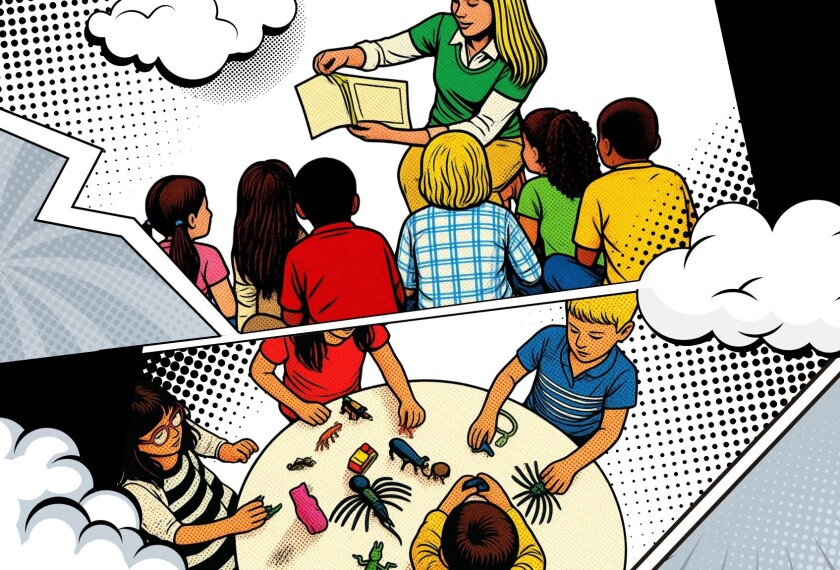
Creating space for students to practice talking is essential for early learners. “Hearing language is one thing, but actually using it, and having fun with it, is another,” says MaryKate DeSantis, a reading expert. ____1____ Compared to the past, more children today arrive at school with experience “communicating” via screens, which can slow down language development and make them uncomfortable starting conversations.
Reading books aloud is a powerful solution. ____2____ Books also offer an easy entry point for teachers to start discussions about characters, plots, and settings. As Ellen Frede, an early learning advisor, puts it, “It just makes perfect sense to have conversations about books you’re reading.”
Casual conversations also hold great value. Asking about a student’s life or interests may feel natural to the child. ____3____ “You’re really thinking ahead about the child’s thinking skills and language use,” Frede explains, “and you try to introduce new and rare words.”
Teachers also need to rethink typical classroom exchanges. Many teacher-student talks follow a short “three-turn” pattern: teacher asks, student responds, teacher gives a brief reply, and moves on. ____4____ This strategy, called “serve and return,” creates deeper conversational engagement and more language practice.
Imaginative play is another missed opportunity. When children play in groups, they plan, create, work things out, and solve problems—all requiring oral language. ____5____ Without daily play time, one kindergarten teacher notes, students miss out on valuable speaking practice.
Finally, fitting science into reading and writing lessons provides rich content for meaningful dialogue. “Science Talk” involves open-ended questions and child-friendly descriptions that strongly support language development.
A. But done well, it requires thoughtful planning, adds Frede.
B. Children who talk more in class tend to score higher on reading tests.
C. Listening to stories helps students learn new words and absorb language structures.
D. However, things are not so simple.
E. This kind of exchange is often brief and teacher-led.
F. Experts suggest extending this exchange by at least two more turns.
1.1.
A
B
C
D
解析:选D。D 前文引用专家观点,指出“听语言”和“实际使用语言”是两回事,后文则转而描述当今儿童通过屏幕“交流”的现状及其导致的语言发展问题。中间需要转折句引出这一现实矛盾。D项“However, things are not so simple.”承上启下,自然地引出屏幕交流带来的复杂性。故选D。
2.2.
A
B
C
D
解析:选C。C 第二段提出“大声朗读”是一个有效的解决方法。空格后面的“Books also offer an easy entry point…”中的“also”是关键提示,说明空格处应填入朗读或听故事的另一项好处。C项“Listening to stories helps students learn new words and absorb language structures.”具体描述听故事对词汇和语言结构的作用,恰好与后文构成“不仅……而且……”的递进关系。故选C。
3.3.
A
B
C
D
解析:选A。A 第三段谈论随意对话的价值,先提出询问学生生活兴趣看似自然而然;随后Frede的引语却说“你其实是在提前思考……”,暗示随意对话要做好其实需要精心设计。A项“But done well, it requires thoughtful planning, adds Frede.”中,“thoughtful planning”与后文“thinking ahead”相呼应,且引出同一人Frede的发言,逻辑贴切。故选A。
4.4.
A
B
C
D
解析:选F。F 第四段介绍了传统课堂中“三回合”师生交流模式,指出其局限。下文出现“This strategy, called ‘serve and return’”,可见空格处应提出一种可被称作“策略”的新做法。F项“Experts suggest extending this exchange by at least two more turns.”直接针对前文的“三回合”模式,建议延长对话回合,“this exchange”回指明确,“this strategy”则自然承接F项的策略内容,衔接精准。干扰项E虽也有“This kind of exchange”可回指,但内容是对“简短”现状的描述,与后文推广的延长策略方向背道而驰,无法引出“This strategy”,故排除。故选F。
5.5.
A
B
C
D
解析:选G。G 本段论述假装游戏对口语发展的价值。空格前指出,儿童分组玩耍时需要口语来计划、协商和解决问题;空格后引用教师的话,说明没有游戏时间学生会失去大量口语练习。G项“Teachers can also join in by asking questions that extend dialogue.”用“also”自然递进——游戏不仅天然促使孩子开口,教师的提问介入还能进一步延伸对话,使语言练习更丰富,与后文“without play time… miss out on… speaking practice”形成合理的因果关联。