
废壳变新材料!花生壳竟能制备高端石墨烯
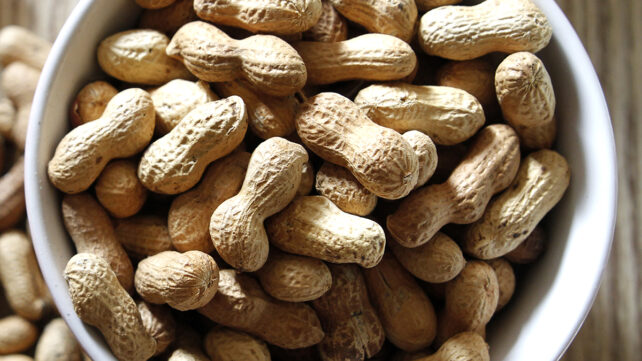
Every year, worldwide peanut production creates more than 10 million tons of waste shells. Most of these shells are either thrown away or turned into low-value products. Now, scientists have discovered a way to transform this unwanted material into a carbon substance much like graphene (石墨烯).
Graphene is a “wonder” material made entirely of carbon. It is super strong, extremely light, and conducts heat and electricity very well. Already used in many products, it holds great promise for improving electronics. However, making high-quality graphene on a large scale is challenging and expensive. A team from the University of New South Wales (UNSW) in Australia has found that humble peanut shells can be used to produce graphene in a cheaper and greener way. Their method requires much less energy and uses no chemicals, giving it an environmental advantage over traditional methods.
The key lies in lignin (木质素), a natural substance in peanut shells that is rich in carbon. The researchers first heated the shells indirectly at around 500°C for five minutes and then applied a short, higher-temperature treatment. This step removed impurities and turned the shells into char — a material packed with carbon that conducts electricity better than the raw shells. Next, they used a technique called flash Joule heating (FJH). This passes a powerful electric flash through the char, instantly heating it to over 3,000°C. The intense heat rearranges the carbon atoms into few-layer graphene. According to the team, this careful preparation is vital to produce graphene with few defects, ensuring it has excellent electrical and heat conductivity.
Although peanut shell-to-graphene methods have been explored before, this study highlights that carefully controlling the starting material significantly improves the graphene quality. The resulting graphene usually consists of a few layers stacked in a less ordered way. The researchers say it could take three to four years to scale up the technique for commercial use. They will continue to refine the process and test it with other organic wastes, such as coffee grounds and banana peels. According to Guan Yeoh, the lead researcher, their work shows a good balance between energy efficiency, graphene quality, and cost.
原创编写 版权所有 侵权必究 每日更新 个性化阅读 英语飙升1.1. What do scientists now do with waste peanut shells?
A Throw them away directly.
B Turn them into low-value products.
C Change them into a carbon material.
D Burn them as a fuel source.
解析:选C。C细节理解题。根据第一段最后一句“Now, scientists have discovered a way to transform this unwanted material into a carbon substance much like graphene”可知,科学家现在将废弃花生壳转化为一种类似石墨烯的碳材料,选项C中的“Change them into a carbon material”是对原文“transform ... into a carbon substance”的同义替换。选项A“直接扔掉”和选项B“制成低价值产品”是第一段开头提到的过去常见的处理方式,并非科学家现在所做的;选项D“作为燃料燃烧”在文中完全没有提及。故选C。
2.2. In Paragraph 2, the underlined word “it” refers to ________.
A the shells
B the carbon
C the graphene
D the electronics
解析:选C。C词意指代题。第二段中,划线词所在句“it holds great promise for improving electronics”的前一句主语为“Graphene”,且该段从开头一直在介绍石墨烯的特性,指出它超强、超轻、导热导电性能极佳,因此“it”指代的正是石墨烯。A“花生壳”并非本段的核心描述对象,且无法与“holds great promise for improving electronics”形成合理的语义搭配;选项B“碳”在本段中仅作为构成石墨烯的元素出现,并没有被赋予这种前景;选项D“电子产品”则是石墨烯有望改善的领域,而非改善行为的主语,颠倒了主客体关系。故选C。
3.3. What can be inferred about traditional graphene production?
A It is cheap and efficient.
B It may use chemicals.
C It produces little waste.
D It relies on plant shells.
解析:选B。B推理判断题。第二段在介绍新方法时提到“Their method requires much less energy and uses no chemicals, giving it an environmental advantage over traditional methods.”,由此可知新方法不使用化学品,且比传统方法具有环保优势,据此可以反向推断传统方法很可能需要用到化学品。选项A“高效且廉价”与原文“making high-quality graphene on a large scale is challenging and expensive”相悖,传统方法本身也是昂贵且具有挑战性的;选项C“产生极少废料”在文中并未提及,无法推断得出;选项D“主要依赖植物壳”则把新研究的原料来源强加给传统方法。故选B。
4.4. What directly leads to the formation of few-layer graphene?
A Heating at 500°C for five minutes.
B A powerful electric flash over 3,000°C.
C Mixing the char with chemicals.
D Pressing the shells into thin layers.
解析:选B。B细节理解题。根据第三段对闪蒸焦耳加热(FJH)的描述“This passes a powerful electric flash through the char, instantly heating it to over 3,000°C. The intense heat rearranges the carbon atoms into few-layer graphene.”可知,强大的电闪瞬间产生超过3000°C的高温,这种强热直接导致碳原子重新排列形成少层石墨烯。选项A“在500°C下加热五分钟”是预处理步骤,其目的是去除杂质并获得炭,并不能直接生成石墨烯;选项C“将炭与化学品混合”与原文“uses no chemicals”的原则完全相反;选项D“将花生壳压成薄层”在文章中完全没有出现。故选B。