
睡姿竟悄悄影响视力健康?
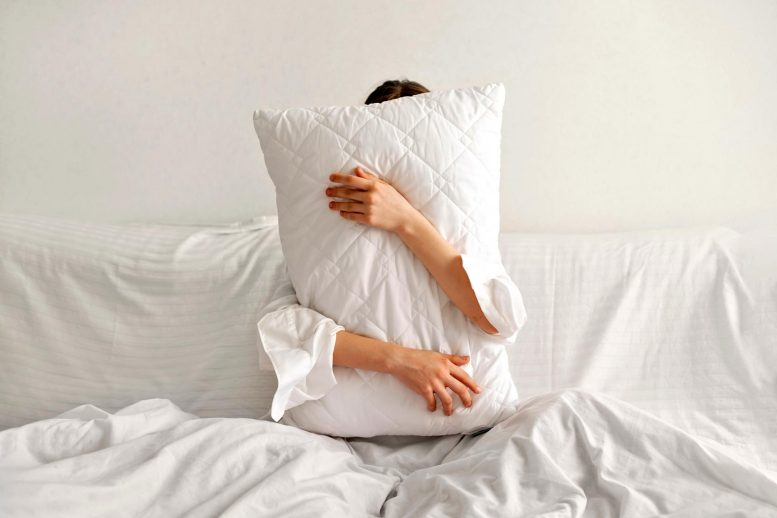
A new study suggests that the way you position your head during sleep could affect your eye health. Researchers found that sleeping without a pillow may help keep eye pressure lower, which could be important for people with glaucoma (青光眼). It occurs when high pressure inside the eye damages the nerve. Eye pressure naturally rises when a person lies down, so sleep posture matters more than you might think.
Scientists believe that using stacked pillows bends the neck. This can press on the jugular veins (颈静脉), the veins that carry blood away from the head, and interfere with the normal drainage (液体排除) of fluid inside the eye. When fluid cannot drain properly, eye pressure goes up.
Researchers studied 144 adults with glaucoma. Over 24 hours, they measured each person’s eye pressure while sitting, lying flat without a pillow, and lying with the head raised on two pillows. After lying with pillows for 10 minutes, eye pressure was recorded again.
The results showed that 67% of the participants had higher eye pressure when their head was raised with pillows. On average, pressure increased by about 1.6 mmHg with pillows compared to lying flat. At the same time, blood flow to the eyes decreased when pillows were used. Younger adults and those with the most common form of glaucoma experienced larger increases.
To explore the cause, the team also examined 20 healthy volunteers. They found that using pillows narrowed the inner space of the jugular veins and increased blood flow speed, which supports the idea that neck position affects circulation and eye pressure.
The researchers suggest that avoiding sleep positions that press on the neck veins might help manage eye pressure. This points to a simple behavioral change that could support traditional treatments. As they noted, such changes may serve as “a simple yet potentially effective strategy.” Patients with glaucoma should talk to a doctor about their sleep posture.
原创编写 版权所有 侵权必究 每日更新 个性化阅读 英语飙升1.1. What can be inferred about glaucoma from Paragraph 1?
A It improves during sleep.
B It only affects elderly people.
C Lying down may worsen glaucoma.
D Sitting can quickly cure it.
解析:选C。C推理判断题。原文指出“It occurs when high pressure inside the eye damages the nerve”和“Eye pressure naturally rises when a person lies down”,即眼压升高损害神经导致青光眼,而躺下时眼压会自然上升。由此可推断躺卧姿势会使其加重,C选项“worsen glaucoma”是对“rises when a person lies down”的同义转述。A与原文相反,B、D无依据。故选C。
2.2. What does the underlined word “This” in Paragraph 2 refer to?
A Piling up pillows.
B The neck being bent.
C Pressing the veins.
D Reducing blood flow.
解析:选B。B词意指代题。原文“using stacked pillows bends the neck. This can press on the jugular veins”中,“This”指向前一句中“bends the neck”这一动作。B选项“The neck being bent”用被动语态结构替换了原文的主动表达“bends the neck”,符合同义转述原则。A是起因,C和D是后续结果。故选B。
3.3. What do we know about the study?
A It offered a cure for glaucoma.
B It found pillows improved blood flow.
C It monitored participants for a full day.
D It found pillows widened the veins.
解析:选C。C细节理解题。第三段明确提到“Over 24 hours, they measured each person’s eye pressure...”,C选项“monitored participants for a full day”是对该句子的同义转述。A选项将第一段“may help keep eye pressure lower”曲解为“cure”;B选项与第四段“blood flow to the eyes decreased”信息相反;D选项与第五段“using pillows narrowed the inner space of the jugular veins”信息相反(将narrowed颠倒为widened)。故选C。
4.4. What is the author’s main purpose in the last paragraph?
A To warn against all pillow use.
B To advise changing a daily habit.
C To question the research findings.
D To describe the neck vein structure.
解析:选B。B推理判断题。最后一段提出“avoiding sleep positions that press on the neck veins might help”,并称为“a simple yet potentially effective strategy”。B选项“changing a daily habit”是对“avoiding sleep positions”与“behavioral change”的概括性同义转述,建议改变日常睡姿习惯。A过于绝对,C、D与段落主旨不符。故选B。