
乌鸦,鸟类中的“智慧担当”(完形填空)
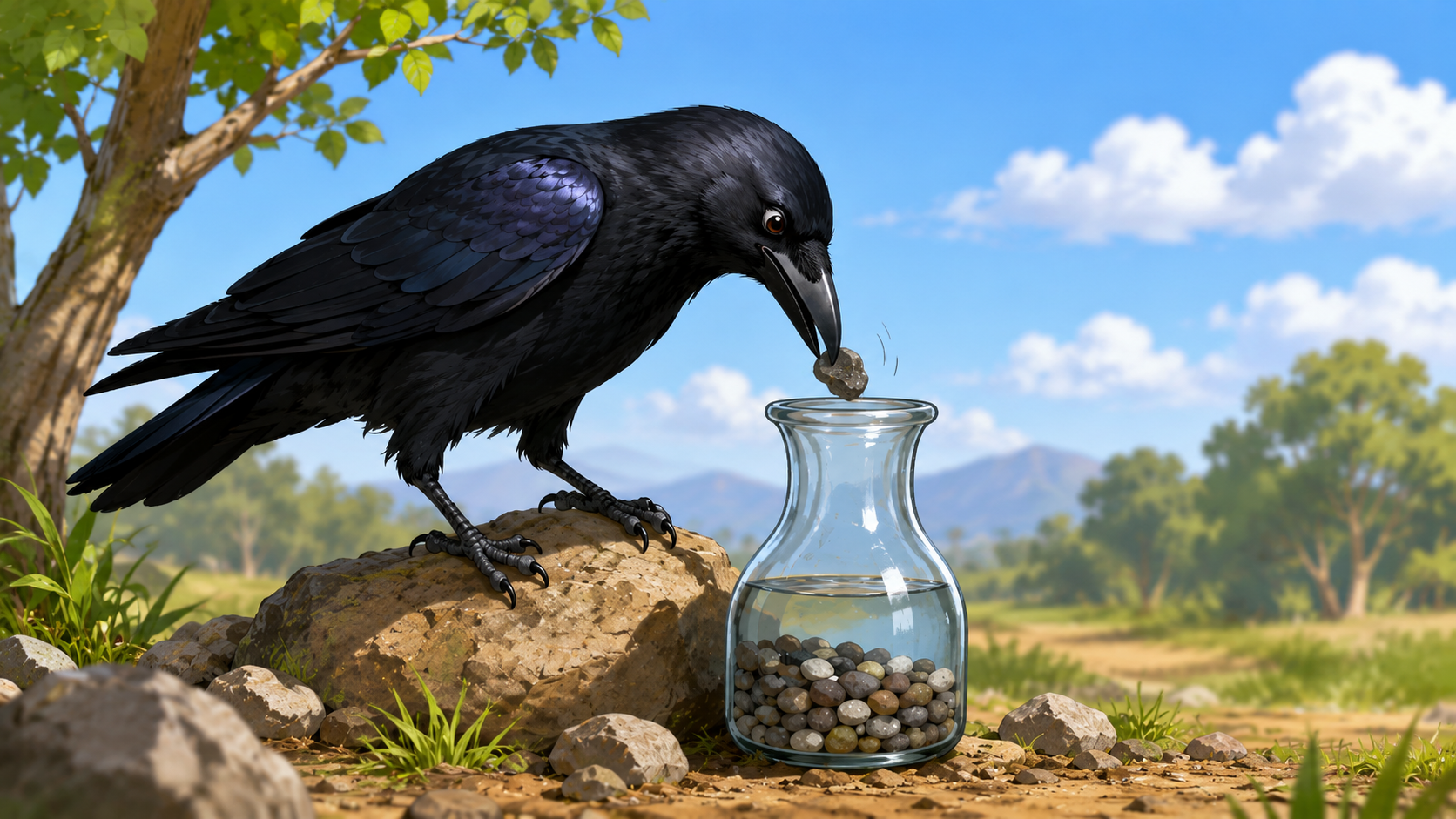
You may know the fable: a thirsty crow drops stones into a jar to drink. In a 2014 experiment, scientists ____1____ this — crows dropped stones into a water-filled tube to get food. This reveals the amazing ____2____ of corvids (鸦科鸟) like crows and jays.
Corvids are expert at ____3____ food. One bird can hide thousands of seeds and find them months later. In an experiment, scrub jays (灌丛鸦) ate worms first, leaving peanuts, ____4____ they knew what they stored and when. When they knew no food would be available the next day, they stored more, showing they can ____5____ ahead.
Crows can recognize human faces. In an experiment, after a masked person ____6____ them, the crows later attacked only the person in that mask, completely ____7____ all other masks.They also tend to avoid places where they saw a dead companion, connecting such places with ____8____.
Tool use is another ____9____ skill. New Caledonian crows make hooks from sticks; Japanese crows drop nuts for cars to ____10____ open. Young crows play often, which ____11____the foundation for intelligence.
Their smartness is linked to social life. They raise young cooperatively, share food, and ____12____ against predators. Some form lifelong pairs, responding to each other’s ____13____.
1.1.
A confirmed
B read
C forgot
D doubted
解析:选A。A 考查动词词义辨析。前文提到乌鸦投石取水的寓言,本句介绍2014年科学家开展相关实验“In a 2014 experiment”,乌鸦完成投石取食行为,结合后文语气“This reveals the amazing”综合可知,confirmed最契合语境。故选A。
2.2.
A strength
B intelligence
C speed
D beauty
解析:选B。B 考查名词词义辨析。前文乌鸦完成投石取食的实验行为,结合后文介绍鸦科动物各类出色生存行为,凸显这类鸟类的思维能力,intelligence表示智力、智慧,契合文意;strength(力量)、speed(速度)、beauty(外形)均脱离论述核心。故选B。
3.3.
A sharing
B cooking
C storing
D wasting
解析:选C。C 考查动名词词义辨析。后文原文“One bird can hide thousands of seeds and find them months later.”点明鸟类藏匿种子、延后取用,属于储食行为,storing表示储存,贴合语境。故选C。
4.4.
A suggesting
B denying
C fearing
D doubting
解析:选A。A 考查现在分词作状语+动词辨析。丛鸦先吃蠕虫、留存花生“ate worms first, leaving peanuts”,这一行为体现它记得储粮种类与时间,suggesting意为表明、印证,契合行文推导逻辑。故选A。
5.5.
A plan
B walk
C go
D turn
解析:选A。A 考查固定短语搭配。原文“When they knew no food would be available the next day, they stored more”鸟类知道次日无食物,进而储存更多粮食,体现前瞻性思维,plan ahead为固定搭配表示提前规划,贴合句意。故选A。
6.6.
A freed
B trapped
C praised
D fed
解析:选B。B 考查动词词义辨析+因果逻辑。后文“the crows later attacked only the person in that mask”说明乌鸦针对性攻击佩戴该面具的人,trapped表示困住、捕捉,属于负面行为;freed(解救)、praised(夸赞)、fed(投喂)均为善意行为,不会引发鸟类反击。故选B。
7.7.
A removing
B ignoring
C wearing
D attacking
解析:选B。B 考查非谓语动词+语境逻辑。句子表明乌鸦只攻击作恶者当时佩戴的面具,对其余面具置之不理,ignoring表示无视、忽视,贴合对比语境。故选B。
8.8.
A safety
B food
C danger
D curiosity
解析:选C。C 考查名词词义辨析。原文“They also tend to avoid places where they saw a dead companion”说明乌鸦避开同伴死亡的地点,将该处场地与风险绑定,danger意为危险,契合动物避险本能;safety(安全)、food(食物)、curiosity(好奇)不符合避险行为逻辑。故选C。
9.9.
A common
B physical
C impressive
D musical
解析:选C。C 考查形容词词义辨析。后文列举乌鸦自制工具、借力车辆开坚果等高阶生存行为,这类技能十分高超亮眼,impressive表示令人惊叹的、出色的,修饰工具使用技能;common(普通的)弱化技能优势,physical(肢体的)、musical(音乐的)和工具使用无关。故选C。
10.10.
A shut
B push
C lock
D crack
解析:选D。D 考查动词固定搭配。文中指乌鸦将坚果丢在路面,借助汽车碾压破开坚果外壳,crack open为固定搭配,表示硬物砸开、裂壳,适配坚果开壳场景;shut(关闭)、push(推动)、lock(锁住)均不符合动作语义。故选D。
11.11.
A doubts
B loses
C lays
D uses
解析:选C。C 考查固定搭配辨析。句意:幼鸦频繁玩耍,为智力发展打下基础,lay the foundation for为固定搭配,意为“为……奠定基础”;doubts(怀疑)、loses(丢失)、uses(使用)均无该固定句式搭配。故选C。
12.12.
A compete
B run
C defend
D unite
解析:选C。C 考查动词短语+并列语境。前文“raise young cooperatively, share food”罗列鸦类群居协作行为,此处并列表达联手抵御天敌,defend against表示防御、抵御,贴合群居求生习性;compete against(竞争)、run against(偶遇)、unite against(联合对抗)虽语法可行,但前文已提及cooperatively(合作),再用unite语义重复;且defend against predators(抵御捕食者)是更精准的群居防御行为,贴合上下文。故选C。
13.13.
A needs
B names
C songs
D fears
解析:选A。A 考查名词词义辨析。原文“Some form lifelong pairs”说明部分鸦科动物终生结伴,伴侣之间会互相配合、彼此照应,respond to each other’s needs表示回应彼此需求,贴合共生习性;names(名号)、songs(鸣叫)、fears(恐惧)不符合伴侣互动逻辑。故选A。
14.14.
A slow
B complex
C ordinary
D primitive
解析:选D。D 考查形容词辨析。句意:科学家曾误判鸟类大脑是_____。后文指出乌鸦大脑虽与猴子结构迥异,却在思维相关脑区拥有相似的神经元数量,进而推出不同进化路径仍可通向高级智能。这一转折表明,先前的误判是低估了鸟类大脑,认为其“原始、低级”。primitive(原始的)符合此意,且与下文advanced intelligence形成对照。slow(迟缓的)侧重速度,complex(复杂的)与误解方向相反,ordinary(普通的)不涉及“原始进化阶段”这层含义,均不贴合语境。故选D。
15.15.
A replies
B leads
C belongs
D refers
解析:选B。B 考查动词短语辨析。句意:不同进化路径最终造就高等智力,lead to为核心短语,意为促成、造就,契合文意;replied to(回复)、belonged to(属于)、referred to(提及)代入后语义不通。故选B。