
热闹欢乐的乡镇集市
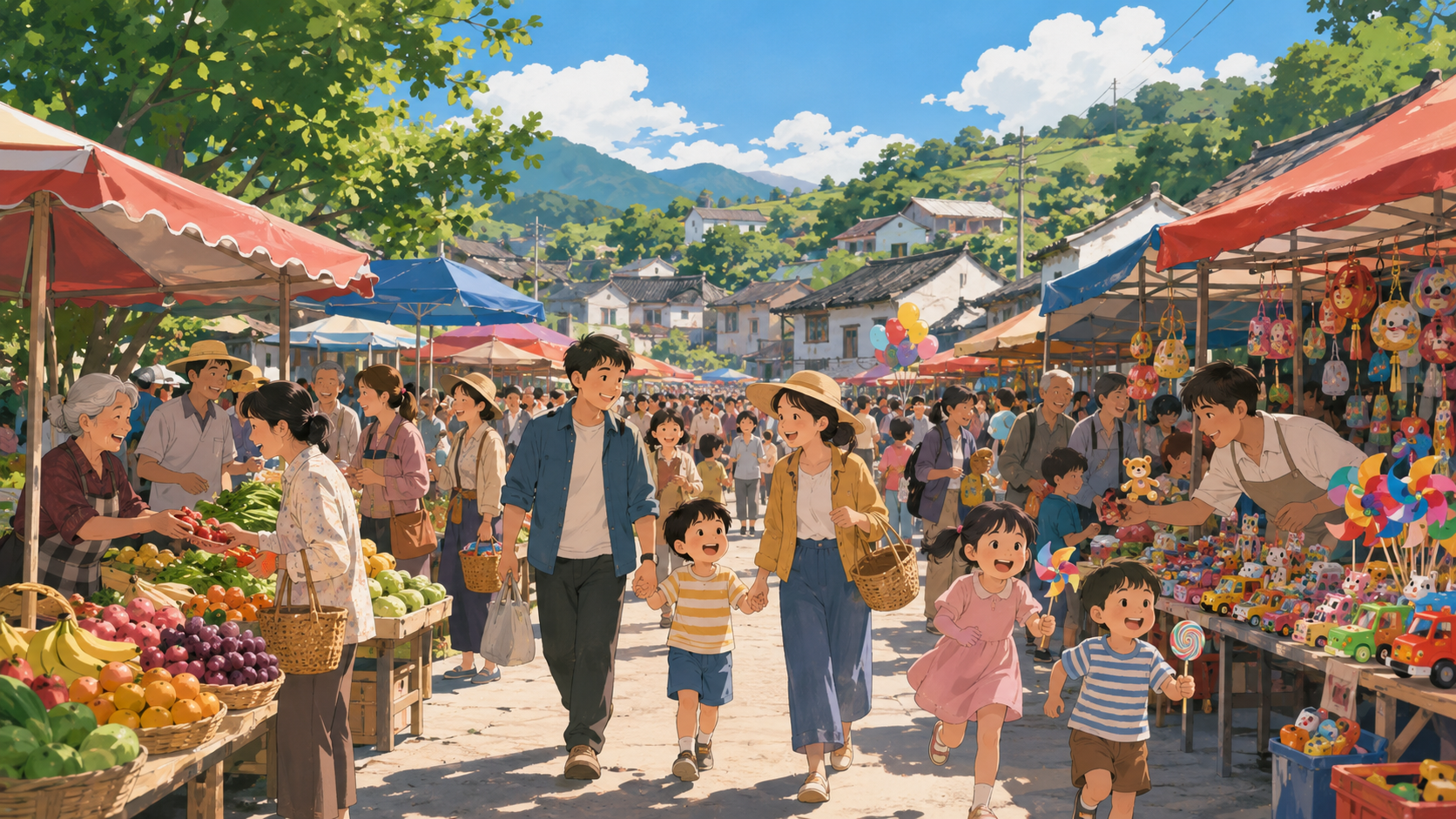
In many Chinese villages or towns, a traditional market is held every few days.
1.1.How often is the market held?
A Every day.
B Every few days.
C Every month.
D
解析:选B。B细节理解题。文章开篇第一句就明确指出“a traditional market is held every few days”(传统集市每隔几天举办一次),因此B项正确。A项“每天”和C项“每个月”都与原文表述不符,文中没有提到集市每天或每月举行。故选B。
2.2.Who do people usually go to the market with?
A Their friends.
B Their families.
C Their teachers.
D
解析:选B。B细节理解题。由文中“villagers go to the market with their families”(村民们和家人一起去赶集)可直接得知,人们通常与家人一同前往集市,所以选B。A项“朋友”和C项“老师”文中均未提及,不能作为正确答案。故选B。
3.3.What can people buy at the market?
A Fruit and toys.
B Desks and bags.
C Books and pens.
D
解析:选A。A细节理解题。文章在描写摊位时提到“Vendors sell fresh fruit, handmade snacks, and all kinds of toys”(商贩出售新鲜水果、手工小吃和各种玩具),水果和玩具都在其中,因此A项正确。B项“课桌和包”和C项“书和笔”在文中完全没有出现,属于无关干扰项。故选A。
4.4.How do children feel about the market?
A Busy.
B Bored.
C Happy.
D
解析:选C。C推理判断题。文中明确写到“Children love the market most”,并通过“run from stall to stall”“try delicious food”“play simple games”以及结尾“filled with noise, color, and joy”等描述,表现出孩子们在集市上非常开心。因此他们感到“快乐”,选C。A项“忙碌的”是用来形容集市和道路的拥挤繁忙,不是孩子们的心理感受;B项“无聊的”则与文中所传达的喜悦之情完全相反。故选C。