
光合作用还没停,橡树为何提前“躺平”?
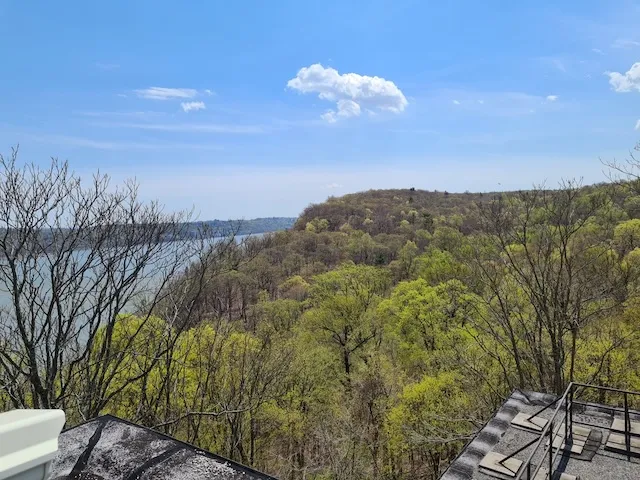
It is natural to think that when a tree is photosynthesizing—using sunlight, water, and carbon dioxide to make food—it is also growing. However, a study of 137 oak sites across the U.S., published in Science Advances, reveals that growth can stop by mid-summer, even though photosynthesis continues into autumn.
This matters for climate change. Forests absorb carbon dioxide and store carbon in wood for decades or centuries, slowing warming. Most models assume higher carbon dioxide boosts both photosynthesis and wood production, but the study shows extra photosynthesis does not always mean more wood.The carbon may go instead to short-lived leaves and fruits.
So where does the carbon go? Some helps the tree restart growth next spring. Some builds new leaves and roots. Some is released into soil. Less ends up in long-term wood storage than scientists assumed.
How do researchers know? Satellites tracked photosynthesis, while trunk sensors detected tiny daily changes: trees swell (膨胀) at night as roots absorb water, then shrink slightly by day as they lose moisture (水分). The long-term swelling trend is growth. In eastern U.S. oaks, growth ran from May to July, but photosynthesis lasted until October. About 36% of annual carbon uptake happened after growth stopped. In California, growth ended by August, with 26% of uptake occurring later.
Why the gap? When weather turns hot and dry, trees lose the internal water pressure that expands their cells, so growth stops. Photosynthesis, however, continues at a slightly reduced rate.
1.1. What does the study find about the growth of oak trees?
A It continues through late autumn.
B It ends earlier than photosynthesis.
C It speeds up in extreme weather.
D It depends mostly on new leaves.
解析:选B。B 细节理解题。文章第一段明确指出橡树“growth can stop by mid-summer, even though photosynthesis continues into autumn”,后文又用具体数据说明东部橡树生长仅持续到七月而光合作用到十月,可见生长结束时间明显早于光合作用。选项A“持续到深秋”与生长在仲夏停止的事实相反;选项C“在极端天气下加速”在文中找不到依据,第五段反而指出干热天气会使生长停止;选项D“主要依赖新叶”属于无中生有,文章只提到碳会分配给短命的叶和果实,并未说生长本身依赖新叶。因此B是正确选项。
2.2. Why does the mismatch between growth and photosynthesis matter greatly for climate change?
A It reveals forests absorb less carbon dioxide than expected.
B It suggests forests may store less carbon long-term.
C It underestimates the carbon stored in wood.
D It shows trees produce more leaves and fruits.
解析:选B。B 推理判断题。文章第二、三段说明,这一时间错配之所以对气候变化意义重大,是因为森林的长期碳储存可能比原有假设要少。研究发现,光合作用固定的一部分碳并没有转化为木材,而是进入了寿命较短的叶、果实或释放到土壤中,导致“Less ends up in long-term wood storage than scientists assumed”,由此可推知森林长期储存的碳量可能会下降。选项A称森林吸收的二氧化碳少于预期,但文章讨论的是吸收后的碳分配,而不是吸收总量减少;选项C说低估了木材中的碳储量,恰恰相反,是原先的模型高估了储存量;选项D“树产生了更多的叶和果实”虽局部属实,却未点出其对气候变化的核心影响——长期碳储存减少。故正确答案为B。
3.3. In Paragraph 4, the author mentions “36% of annual carbon uptake” mainly to ________.
A praise the accuracy of satellites
B compare oak trees in different regions
C stress the size of the timing gap
D explain why photosynthesis lasts long
解析:选C。C 推理判断题。原文第四段提到“growth ran from May to July, but photosynthesis lasted until October. About 36% of annual carbon uptake happened after growth stopped”,用具体数字说明生长停止后仍有大量碳吸收,突出了生长与光合作用之间的时间错位之大,C项正确。A项“赞扬卫星的准确性”并非此处表达重点,卫星和传感器只是研究方法;B项“比较不同地区的橡树”只是段落中的背景信息,并非数据引用的主要目的;D项“解释光合作用为何持续很久”过于片面,只涉及数据的一个侧面。故选C。
4.4. The study implies that under a warming climate, current forest carbon storage predictions may ________.
A be too optimistic
B attract greater attention
C prove perfectly correct
D focus more on dry years
解析:选A。A 推理判断题。末段指出,如果这种模式在其他物种中同样存在,那么“predictions of forest carbon storage in a warming world will need revision”;结合前文可知,当前模型大多假设二氧化碳增加会同步提升木材生产,但研究证实额外光合作用并未带来等量的木材,这意味着现有预测高估了森林的长期固碳能力,即“过于乐观”。选项B“引起更大关注”未在文中暗示;选项C“证明完全正确”与需要修正的说法矛盾;选项D“更关注干旱年份”虽然文章提到极端干湿年份差距最大,但这并非研究对当前预测可靠性的总体评价。故选A。