
谷歌 CEO 斯坦福演讲:三种心态,照亮前路人生
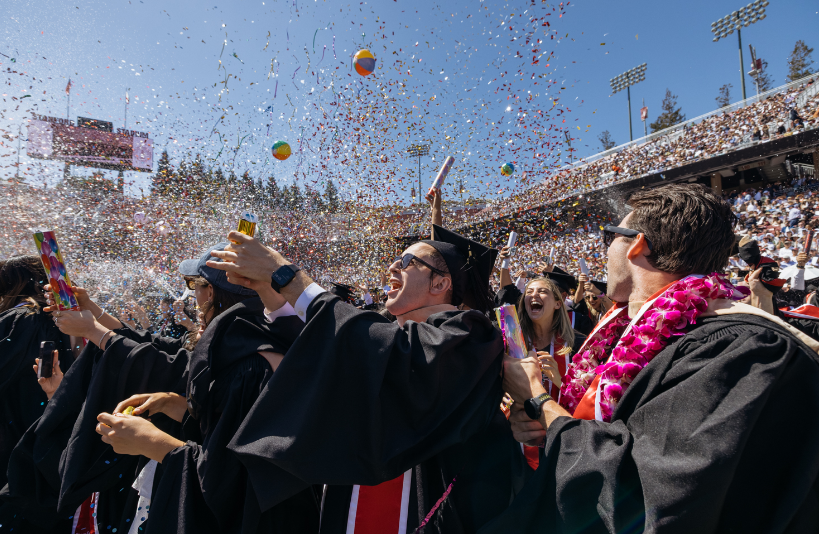
Sundar Pichai, CEO of Google, gave a speech to graduating students at Stanford University. He shared three pieces of advice with the graduates.
First, choose to see the good side. When Pichai came to California as a student, he thought the sea would be warm and the hills green. But the sea was cold and the hills were brown. His host (房东), Mrs. Jane Earl, said, “We like to call it golden.” Pichai saw brown, but Mrs. Jane Earl saw golden. This small change in how he looked at things made a big difference.
Second, work on difficult things. Early in his job, he joined a small team of about ten people to build Chrome, a new web browser (浏览器). Many thought it was too hard and would need hundreds of people. Chrome gained millions of users quickly, but then the number stopped growing. The team did not give up, but kept improving it. “Working on hard things teaches you a lot,” Pichai said. “Even if you miss the biggest goal, you still achieve something great.”
Third, do what excites you. Technology has always excited Pichai. “Seeing computers change lives is the most exciting thing,” he said. He told the students not to just follow their parents’ wishes or what friends choose. He said, “Think about the things that keep you talking excitedly late into the night — and go do those.”
Finally, Pichai said, “You will face many moments. You don’t have to be right every time. Just keep moving forward.”
原创编写 版权所有 侵权必究 每日更新 个性化阅读 英语飙升1.1.Why does the writer tell the golden story?
A To describe the weather.
B To explain the bright side.
C To praise California’s beauty.
D To share a funny story.
解析:选B。B细节理解题。文章第二段首句明确第一条建议是“choose to see the good side”,随后用金色山丘的故事具体说明:Pichai看到的是brown,而他的房东看到的是golden,这正是“a small change in how he looked at things”。因此这个故事是为了解释看到光明的一面。故选B。
2.2.What can we learn from the Chrome team story?
A Big teams are always needed.
B Hard work always leads to success.
C Difficult tasks are not worthwhile.
D Challenges teach important lessons.
解析:选D。D推理判断题。Pichai在第三段总结道:“Working on hard things teaches you a lot”,“Even if you miss the biggest goal, you still achieve something great”,说明挑战能带来宝贵的经验与成长。故选D。
3.3.What does Pichai advise students to do in Paragraph 4?
A Follow their friends’ choices.
B Listen to their parents’ wishes.
C Do what truly interests them.
D Choose a career in technology.
解析:选C。C细节理解题。第四段中Pichai明确劝告学生“not to just follow their parents’ wishes or what friends choose”,而要“Think about the things that keep you talking excitedly late into the night — and go do those”,即做自己真正感兴趣的事。故选C。
4.4.What is Pichai’s attitude in the last paragraph?
A Rather worried.
B Quite strict.
C Very serious.
D Truly encouraging.
解析:选D。D观点态度题。最后一段Pichai说:“You don’t have to be right every time. Just keep moving forward.”这些话意在鼓舞和支持学生,体现出鼓励的态度。A项颠倒是非,他并未表现出担忧;B项无中生有,文中没有体现严格;C项以偏概全,虽然语气认真,但整体目的是鼓励而非严肃说教。故选D。
5.5.Which is the best title for the passage?
A Three Pieces of Advice.
B The Story of Chrome.
C Pichai’s College Days.
D The Golden Hills.
解析:选A。A主旨大意题。文章首句即点明主旨:Pichai “shared three pieces of advice”,随后三段分别阐述”choose to see the good side” “work on difficult things” “do what excites you”这三条建议。故选A。