
减肥后总反弹?肠道里的这种细菌或许能帮忙
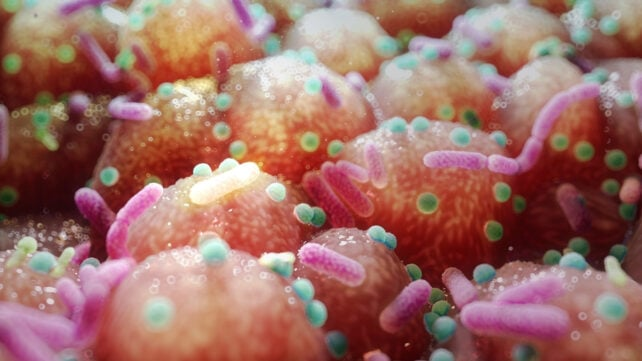
Losing weight is hard, and keeping it off is often even harder. Research shows most people who lose weight regain some within a few years. This is often blamed on weak willpower, but evidence reveals that after weight loss, the body undergoes biological changes that promote regain—increased hunger, shifts in metabolism (新陈代谢), and hormone changes affecting appetite. Even with GLP-1 weight-loss drugs, maintaining weight is difficult once treatment stops. A new study in Nature Medicine suggests a gut (肠道) bacterium, Akkermansia muciniphila, may help.
Akkermansia muciniphila is a common bacterium living in the mucus (粘液) layer lining the human gut. It feeds on mucin, the substance that forms this protective layer, and is believed to help maintain the gut barrier and influence metabolism. Higher levels of this bacterium are linked to better blood sugar control and a lower risk of type 2 diabetes, while lower levels are found in people with obesity and diabetes. Due to these connections, researchers have explored whether it could aid weight maintenance.
In the study, 90 overweight or obese adults followed a very low-calorie diet of meal replacements (800–900 calories daily) for eight weeks. Those who lost at least 8% body weight then took either a placebo (安慰剂) or a heat-treated form of Akkermansia muciniphila daily for 24 weeks. The bacteria were no longer alive, but their cell components can still bring benefits. They were also asked to follow a healthy diet without specific instructions. Results showed the supplement group regained about 1.2 kg on average, versus 3.2 kg in the placebo group.
However, the gut’s bacterial community is complex, and this study was small with only six months of follow-up, so long-term effects are unclear. The supplement’s effects were not tested independently of lifestyle changes, nor should it be viewed as a substitute for them. More independent studies are needed.
原创编写 版权所有 侵权必究 每日更新 个性化阅读 英语飙升1.1. What do people commonly think causes weight regain after losing weight?
A A weak will.
B A slow metabolism.
C Changing hormones.
D An unhealthy lifestyle.
解析:选A。A细节理解题。根据第一段第二句“This is often blamed on weak willpower”可知,人们通常认为体重反弹源于意志力薄弱。选项B和C是科学研究揭示的生理原因,并非人们的普遍看法;选项D在文中未提及。故选A。
2.2. What can be learned about Akkermansia muciniphila from Paragraph 2?
A It consumes a gut substance.
B It increases diabetes risk.
C It damages the gut barrier.
D It causes type 2 diabetes.
解析:选A。A细节理解题。根据第二段第二句“It feeds on mucin, the substance that forms this protective layer”可知,该细菌以形成肠道保护层的黏蛋白为食。选项B将原文“lower levels are found in people with obesity and diabetes”中的相关性曲解为细菌会增加糖尿病风险;选项C的“damages”与原文“help maintain the gut barrier”相悖;D项“导致2型糖尿病”错误,文中仅提到糖尿病患者的该细菌水平较低,并未指出其致病性。故选A。
3.3. What can be inferred about the supplement from the study?
A It worked better than diet.
B It helped slow weight return.
C It prevented all weight regain.
D It had no obvious effect.
解析:选B。B推理判断题。根据第三段数据“the supplement group regained about 1.2 kg on average, versus 3.2 kg in the placebo group”可知,补充剂组体重反弹幅度明显小于安慰剂组。由此可推断,补充剂起到了减缓体重反弹速度的作用。选项A中的比较在文中并无依据;C项“阻止了所有体重反弹”过于绝对,补充剂组仍有1.2公斤的体重增加;选项D与数据结果完全相反。故选B。
4.4. What is the last paragraph mainly about?
A Applying the study results.
B The bacterium’s health benefits.
C The complex gut environment.
D The study’s existing limits.
解析:选D。D段落大意题。最后一段以“However”引出转折,依次指出“the study was small”(样本量小)、“only six months of follow-up”(随访期短)、“long-term effects are unclear”(长期效果不明)、“effects were not tested independently of lifestyle changes”(未独立于生活方式变化进行测试)以及“More independent studies are needed”(需要更多独立研究)。这些内容均是对该研究自身局限性的客观陈述,因此D项“研究的现有局限性”最能概括本段主旨。A项“应用研究结果”在本段未涉及;B项“细菌的健康益处”是前文内容,非末段重点;C项“复杂的肠道环境”虽在段首提及,但仅为引出研究局限的一个细节,不足以概括全段。故选D。