
牡蛎冰淇淋火爆路边小店
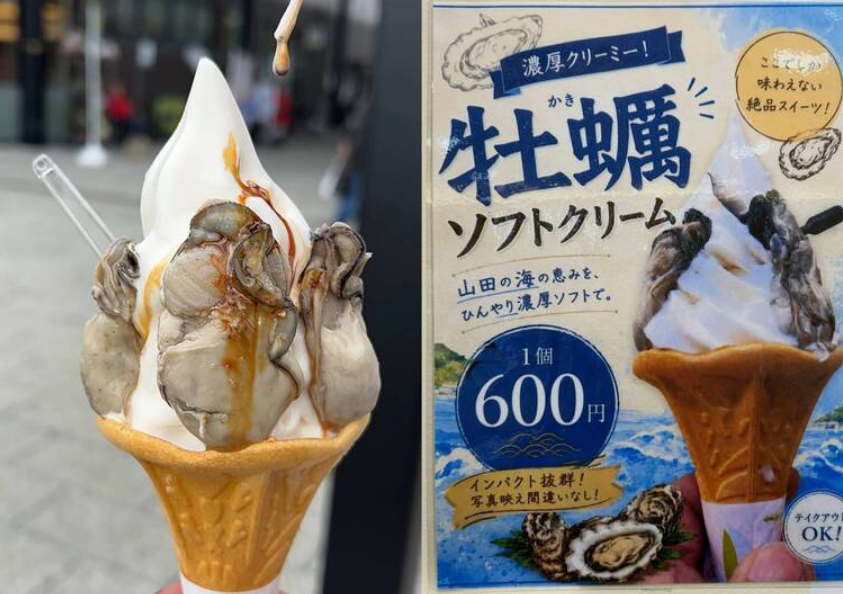
Many people would never connect creamy soft-serve ice cream with fresh oysters (牡蛎). Yet Michino-eki Yamada’s new summer snack has proved this surprising match is worth trying. This Japanese roadside station suddenly became an online hit, attracting large numbers of food lovers who wanted to experience the one-of-a-kind dessert for themselves.
What makes the dessert unique is its combination of ingredients. It uses thick milk soft serve as the base. Then fresh oysters from Yamada Bay are placed on top, followed by a thin layer of special soy sauce. The description may sound unappealing, but the mix of sweet milk, fresh seafood and salty sauce creates a surprisingly pleasant taste.
Despite its unusual combination, the dessert quickly caught attention online.As photos and videos of the oyster ice cream spread across social media, people became more and more astonished. Plenty of viewers found the treat so unbelievable that they guessed it was designed by AI rather than human cooks. Some Internet users left amused comments, saying the dessert had gone far beyond ordinary sweets and that Japanese food creators had endless imagination.
If you want to have this unusual food experience, you can easily afford it. The shop will keep selling the oyster soft serve throughout the summer. Each one costs just 600 yen, which is about 3.7 US dollars. It won’t burn a hole in your pocket and will leave you with an unforgettable memory.
原创编写 版权所有 侵权必究 每日更新 个性化阅读 英语飙升1.1.What happened to Michino-eki Yamada after it introduced the oyster ice cream?
A It lost many regular customers.
B It became famous on the Internet.
C It stopped selling other foods.
D It raised the price of all desserts.
解析:选B。B 细节理解题。文章第一段第二句明确提到 “This Japanese roadside station suddenly became an online hit”,即它突然在网络上走红,这与选项B的描述完全一致,因此选择B。文章并未提及它失去了老顾客、停止销售其他食品或提高了所有甜品的价格,因此A、C、D选项均无依据。故选B。
2.2. What is the correct order of ingredients used in this dessert from bottom to top?
A Oysters → soy sauce → soft serve.
B Soy sauce → oysters → soft serve.
C Soft serve → oysters → soy sauce.
D Soft serve → soy sauce → oysters.
解析:选C。C 细节理解题。文章第二段清晰地描述了制作过程:“It uses thick milk soft serve as the base. Then fresh oysters...are placed on top, followed by a thin layer of special soy sauce.” 这意味着软冰淇淋在最底部作基底,之上是牡蛎,最顶层是酱油。因此从下到上的顺序是 Soft serve → oysters → soy sauce,对应C选项。其他选项的顺序都与原文描述不符。故选C。
3.3. What did viewers think of the dessert at first?
A Quite cheap.
B Too traditional.
C Hard to believe.
D Very delicious.
解析:选C。C观点态度题。文章第三段提到,随着照片和视频的传播,“people became more and more astonished” 以及 “Plenty of viewers found the treat so unbelievable that they guessed it was designed by AI”。这表明他们最初的反应是震惊和难以置信,这与选项C“Hard to believe” 完全吻合。选项A(很便宜)和D(很美味)可能是一些人的后续感受,但不是最初的看法;选项B(太传统)则与事实完全相反。故选C。
4.4. What does the underlined sentence mean in the last paragraph?
A It is cheap.
B It tastes bad.
C It sells well.
D It lasts long.
解析:选A。A句意理解题。划线句子 “It won’t burn a hole in your pocket” 位于文章结尾。前文具体说明了这款甜点的价格仅为600日元(约3.7美元),并说“you can easily afford it”(你很容易就能买得起)。从“不会在你的口袋里烧个洞”这一形象的比喻可以推断,其含义是价格不贵,不会造成经济负担。因此,它的意思是“很便宜”,对应A选项。B和D选项的意思在上下文中找不到任何支持,C选项(卖得好)虽然可能符合事实,但并非这个句子的含义。故选 A。
5.5. What is the main idea of the passage?
A A popular strange ice cream.
B Ways to make seafood snacks.
C Online food comments.
D Prices of Japanese desserts.
解析:选A。A主旨大意题。文章开篇引出牡蛎冰淇淋这一奇特组合,第二段介绍其独特配料,第三段描述它引发的网络轰动和人们难以置信的反应,最后一段说明其亲民的价格。全文所有内容都紧密围绕“牡蛎冰淇淋”这一核心对象展开,介绍它如何因其古怪而流行起来。因此,文章的主旨是介绍一种流行的奇怪冰淇淋,即A选项。B选项范围过大,文章只讲了这一种特定小吃;C选项只概括了第三段的内容;D选项更是只涉及最后一段的价格信息,均无法概括全文。故选 A。