
《玩具总动员5》为何在中国“叫好不叫座”?
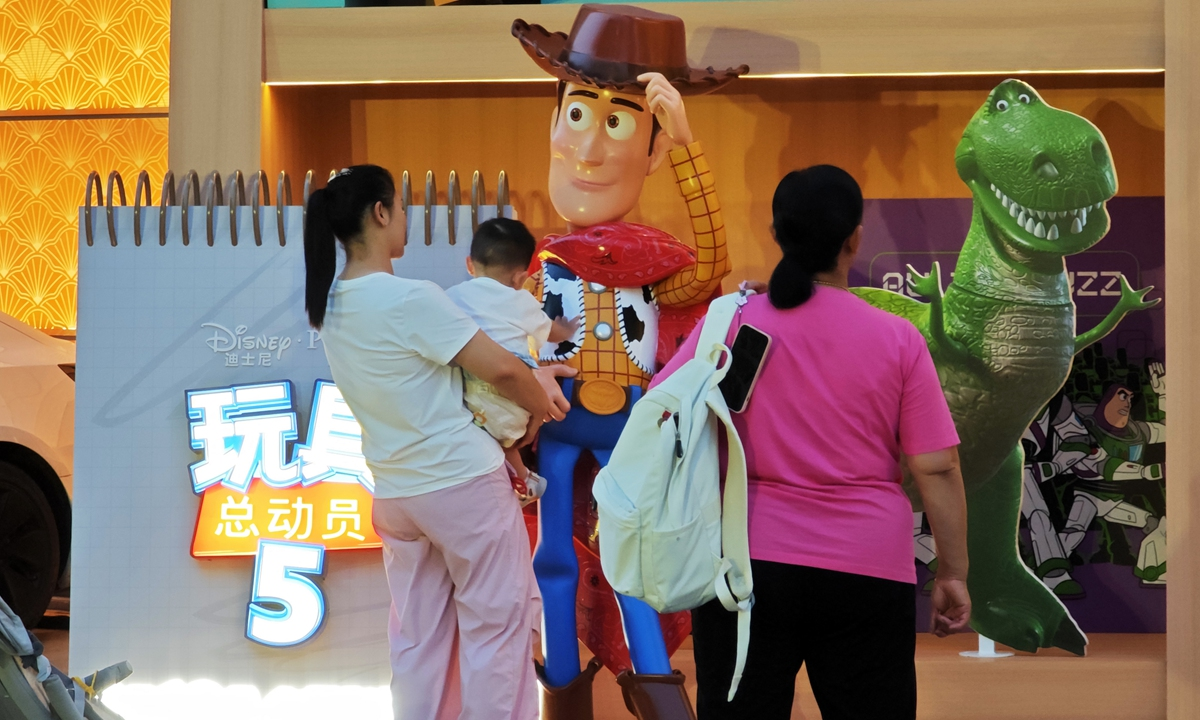
For many years, Toy Story movies have talked about the true value of toys. Now Toy Story 5 brings up this topic again. Today, kids spend lots of time on phones and tablets. The film asks a simple question: can traditional toys still be important in children’s lives?
In Toy Story 5, the toys no longer fight over a child’s love. Instead, they compete with digital screens for kids’ attention. However, the film doesn’t say screens are bad. It shows that toys offer something technology can’t give—imagination and shared memories. In the end, toys and technology become friends, not enemies. It gets good ratings (评分), with 8.1 on Douban and 7.6 on IMDb.
However, its ticket sales are disappointing in China. It earned much less money here than in North America. There are several reasons. First, Toy Story 3 already gave fans a perfect ending. The fifth story follows an old storyline and fails to create strong feelings. Besides, most Chinese viewers did not watch the first movie in their early childhood, so they don’t have strong childhood memories of it. At the same time, China’s own cartoon industry is growing fast. Wonderful Chinese cartoons give people more choices.
1.1.What’s the main theme of Toy Story 5?
A Toys’ real value.
B Kids’ free time.
C Digital games.
D Modern childhood.
解析:选A。A细节理解题。文章开头便指出“Toy Story movies have talked about the true value of toys. Now Toy Story 5 brings up this topic again”,全片围绕“传统玩具在孩子生活中是否仍然重要”展开,核心正是探讨玩具的真正价值,因此A项正确。B项“孩子的空闲时间”仅仅是背景信息,并非电影探讨的主题;C项“数字游戏”只是影片中与玩具对比的对象,不能概括主旨;D项“现代童年”范围过宽,文章聚焦的始终是玩具的价值而非整个童年。故选A。
2.2. What does the film think of digital screens?
A They are useless.
B They are harmful.
C They are not all bad.
D They should replace toys.
解析:选C。C细节理解题。第二段明确写道“the film doesn’t say screens are bad”以及结尾“toys and technology become friends, not enemies”,说明电影并未完全否定数字屏幕,而是认为它们并非一无是处,因此C项正确。A项“无用”和B项“有害”与电影态度相反;D项“应该取代玩具”文中完全没有提及,所以均不选。故选C。
3.3. How is the film’s score online?
A Quite low.
B Pretty good.
C Below average.
D Very terrible.
解析:选B。B细节理解题。第二段最后一句直接给出了“It got good ratings, with 8.1 on Douban and 7.6 on IMDb”,明确表示网络评分不错,因此B项“相当好”符合文意。A项“相当低”、C项“低于平均水平”和D项“非常糟糕”都与“good ratings”相矛盾,不能选择。故选B。
4.4. What is the third paragraph mainly about?
A The success of ticket sales.
B Reasons for poor sales in China.
C Better Chinese films.
D Fans’ perfect ending.
解析:选B。B 段落大意题。第三段以“However, its ticket sales are disappointing in China”开头,随即用“There are several reasons”引出分析,从“旧故事线缺乏感染力”“中国观众缺少童年记忆”到“中国国产动画崛起”等方面,解释了中国票房不佳的原因,因此B项准确概括了段落大意。A项“票房的成功”与原文“disappointing”相悖;C项“更好的中国电影”只是原因之一,无法覆盖整段;D项“粉丝的完美结局”同样是单一原因,不够全面。故选B。
5.5. What do audiences finally choose movies by?
A Famous brands.
B Big budgets.
C Popular actors.
D Touching stories.
解析:选D。D细节理解题。文章结尾句“Viewers only choose films with touching stories”直接给出了观众选择的依据是感人的故事,因此D项正确。A项“著名品牌”在末段已被否定,因为影片的价值“not just a famous brand”;B项“大预算”和C项“当红演员”在文中完全没有出现,自然不是答案。故选D。