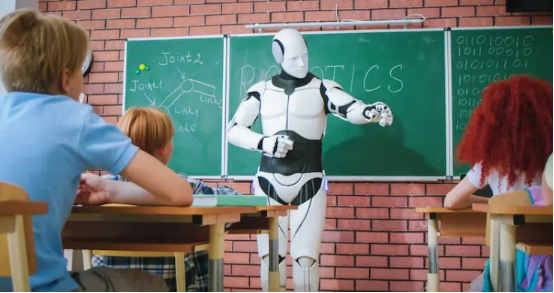
At a time when AI seems to be permeating nearly every aspect of daily life, Norway is taking steps to protect young students. The European nation has decided to prohibit the use of generative AI in classrooms for children ages 6 to 13.
This is an important stage in a child’s education, when students are building the foundational skills that will support them throughout their lives. By ensuring that children develop these abilities without relying on artificial intelligence, Norway is investing not only in their futures, but also in the long-term strength of its workforce.
Norway’s approach stands in contrast to that of many schools and districts around the world, which have begun integrating AI-powered tools into lesson plans and classroom activities. In relation to the decision, Norway’s Prime Minister Jonas Gahr Støre said, “The most important thing in school is that our children learn to read, write, and do mathematics.”
The policy is not an outright rejection of AI in education though. Beginning in August 2026, students ages 14 to 16 will be allowed to use AI in the classroom under regulated conditions. Teachers will first receive training on how to implement the technology in ways that support learning rather than replace it, and students will then be taught how to use AI responsibly without substituting it for their own reasoning. By the time students are 17 to 19, they will have broader access to AI tools, but they will also have developed the skills needed to use them effectively. The goal is to ensure that students can perform the same tasks without artificial intelligence and use it as a tool to enhance what they already know, rather than as a replacement for cognitive reasoning.
In 2024, Norway also banned the use of smartphones in classrooms, and the results were overwhelmingly positive. Students were reportedly more engaged and social, and there were fewer cases of online bullying. Whether restrictions on AI will have a similar effect remains to be seen, but Norway’s experience with limiting technology in schools suggests that the approach may offer benefits beyond academics.
原创编写 版权所有 侵权必究 每日更新 个性化阅读 英语飙升
1.1.Why does Norway focus on foundational skills?
A To help students pass exams.
B To prepare future workers.
C To make AI more popular.
D To reduce parents’ worries.
解析:选B。B 推理判断题。根据第二段“Norway is investing not only in their futures, but also in the long-term strength of its workforce”,挪威投资基础技能旨在培养未来的劳动力。A文中没有提到考试相关内容,无依据;C文章限制低龄学生AI使用,不会推广AI,逻辑相反;D全文未提及家长担忧,属于无中生有。故选B。
2.2.The word “outright” in Paragraph 4 probably means ______.
A complete
B public
C simple
D slow
解析:选A。A 词义猜测题。根据第四段“The policy is not an outright rejection of AI in education though”以及下文14-16岁可在监管下使用以及17-19岁更广泛的使用说明,可见挪威并非“完全拒绝”AI。B公开的、C简单的、D缓慢的均无法贴合上下文逻辑,语义不通。故选A。
3.3.What can 15-year-old students in Norway do with AI?
A Use it as they like.
B Use it under set rules.
C Teach it to young kids.
D Keep it out of class.
解析:选B。B 推理判断题。根据第四段“Beginning in August 2026, students ages 14 to 16 will be allowed to use AI in the classroom under regulated conditions”,15岁学生属于14-16岁年龄段,可以在受监管的条件下使用AI。A随意使用,与原文regulated conditions管控使用冲突;C文中没有提到教低龄学生AI;D完全禁止使用,是6-13岁学生的规定,不符合15岁政策。故选B。
4.4.What is Norway’s overall attitude toward AI in education?
A It should be banned for all ages.
B It is only useful for older teenagers.
C It can replace traditional homework.
D It is a valuable tool when used properly.
解析:选D。D 观点态度题。通读全文可知,挪威并非全盘禁止AI教学:6-13岁学生禁用AI打基础,14 岁以上学生可在规范管控下使用AI,文中明确提出使用AI的目标是把它当作拓展知识的工具,而非替代自主思考。D选项“合理使用时是有价值的工具”是原文核心观点的同义转述。A“所有年龄段都该禁用”与14岁以上可使用AI的政策矛盾;B“仅对大龄青少年有用”表述片面,文中只说明大龄学生使用限制更少,并未说AI只对他们有价值;C“能替代传统作业”和原文“不能用AI替代自主推理”相悖。故选D。
