
苏州荷花集市:一朵荷花见证生活变迁
When Liu Qinghua was a child, the lotus pond behind her home was not a place of beauty. Every summer, she dug lotus roots from the mud. She loaded them onto her bicycle and rode from village to village to sell them. She never had time to stop and enjoy the flowers.
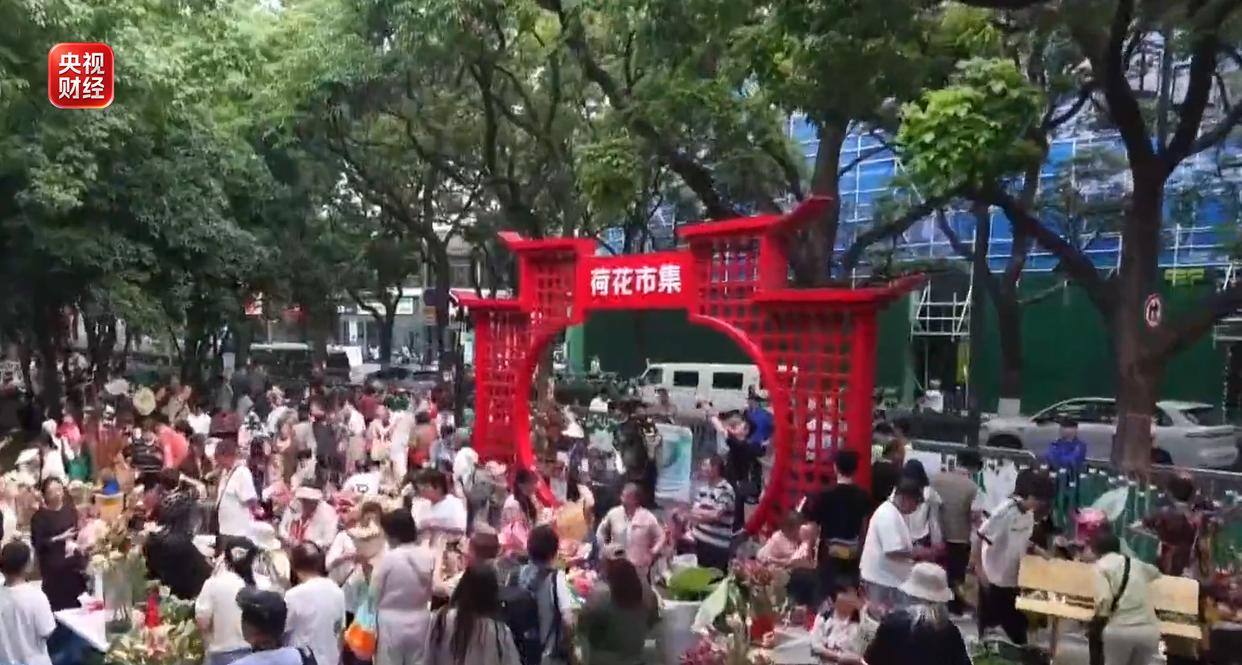
But now, things have changed. Liu, now 34, lives in Suzhou, Jiangsu. On summer weekends, she visits the city’s lotus markets with friends and family. These markets have become a popular attraction in recent years.
The tradition of lotus markets in Suzhou dates back to the Song Dynasty (960-1279). Local farmers harvest the flowers at night and take free buses to the city before sunrise. By 7 am, their stalls are set up with flowers still wet with morning dew. In recent years, the vendors have improved their packaging with colorful designs. Some even use misting(喷雾) devices to keep the flowers cool and fresh. The whole market creates a peaceful and pleasant atmosphere.
For Liu, the markets mean more than just flowers. “Suzhou has long been a place where people find beauty in everyday life,” she said. “You see lotus flowers everywhere. This beauty is part of our daily life.”
Many young people now choose lotus flowers for home decoration over roses or lilies. This shows a growing interest in traditional culture and Chinese aesthetics(美学). As one visitor said, “The public is more open to traditional culture than before.” The lotus markets have become a great example of cultural tourism. They are rooted in local tradition and supported by both farmers and the government. For people like Liu, they are also a chance to reconnect with a flower that once meant only hard work.
原创编写 版权所有 侵权必究 每日更新 个性化阅读 英语飙升1.1. What did Liu Qinghua do every summer when she was young?
A Sold lotus roots.
B Planted flowers.
C Visited markets.
D Worked in cities.
解析:选A。A细节理解题。根据第一段的“she dug lotus roots from the mud...rode from village to village to sell them”可知,她小时候挖藕并沿村售卖。故选A。
2.2. How has Liu’s relationship with lotus flowers changed?
A She now sells them for a living.
B She now enjoys them in her free time.
C She still has no interest in them.
D She now grows them in her garden.
解析:选B。B细节理解题。根据第一段的“never had time...enjoy the flowers”和第二段的“now, 34...visits the city’s lotus markets with friends and family”的对比,可知她现在在周末闲暇时赏花。故选B。
3.3. What can we learn about the lotus market in Suzhou?
A It was started by the government.
B It sells flowers from other countries.
C It has a very long history.
D It only opens in winter.
解析:选C。C推理判断题。根据第三段的“The tradition of lotus markets in Suzhou dates back to the Song Dynasty (960-1279)”可知,荷花市场有悠久历史。故选C。
4.4. The underlined word “vendors” in Paragraph 3 refers to ______.
A city officers
B market visitors
C local farmers
D bus drivers
解析:选C。C词义猜测题。根据第三段的“Local farmers harvest the flowers at night...their stalls are set up”可知,vendors即摆摊卖花的当地农民。故选C。
5.5. What is the best title for the passage?
A Life in a Small Village
B The Lotus Market Tradition
C The Best Way to Sell Flowers
D Lotus Roots Are Healthy Food
解析:选B。B主旨大意题。全文围绕苏州荷花市场展开——从童年劳动到成年欣赏,从宋代传统到现代复兴。选项B“The Lotus Market Tradition”准确概括主题。A以偏概全(仅覆盖童年部分),C无中生有,D张冠李戴。故选B。