睡个好觉,先给卧室降温?(七选五)
睡个好觉,先给卧室降温?(七选五)


You know the feeling: after one bad night, everything seems harder. Yet for many people, poor sleep is not a rare accident but a daily habit. ___1___ In simple terms, it is the set of habits and environmental conditions that support regular, restful sleep — from your sleep schedule and bedroom setup to when you exercise and how much light you get.
The single most important habit, sleep experts say, is keeping a consistent sleep-wake schedule. ___2___ If you wake at the same time each morning, your body builds a strong rhythm that tells it when to feel sleepy the following night.
A schedule alone is not enough, however. Our brain has no light switch, so we need a “wind-down” window before bed: an hour or two of calm rather than stimulation. ___3___ Reading a paper book, listening to soft music or doing slow breathing exercises are all good choices.
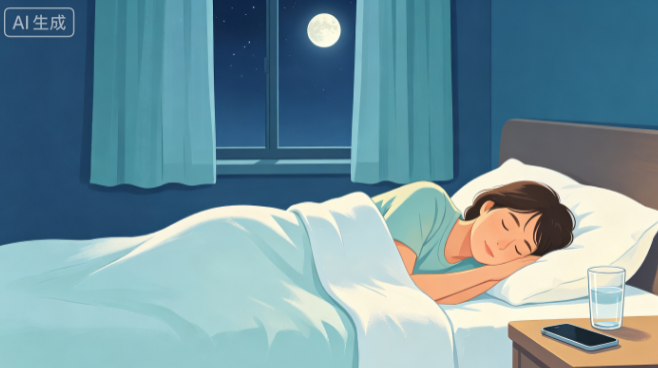
Your bedroom matters as much as your routine. As night falls, your core body temperature needs to drop by 1 or 1.5 degrees to start sleep, so a cool room helps. ___4___ A dark, quiet space with few distractions also tells your brain that this room is for rest.
Finally, what you do hours before bed can undo your good intentions. The blue light from screens limits the production of melatonin (褪黑素), the hormone that brings sleep. ___5___ In a busy world, treating sleep as a true priority is a real act of self-care.


A. Keeping your wake time fixed, however, matters more than when you go to bed.
B. This is why trying to “catch up” on sleep at weekends rarely works.
C. So what exactly do scientists mean by “sleep hygiene”?
D. Heavy meals, caffeine and alcohol in the evening can also break your sleep.
E. Aim to keep the room at around 18 to 20 degrees Celsius.
F. Screen time before bed makes falling asleep harder.
G. Consistency, not perfection, is what finally fixes broken sleep.

原创编写 版权所有 侵权必究 每日更新 个性化阅读 英语飙升

1.1.

A

B

C

D

解析:选C。1. C 上下文衔接题。前文说“poor sleep is not a rare accident but a daily habit”(睡不好是日常习惯而非偶然),已暗示要解释某个概念;空后句“In simple terms, it is the set of habits and environmental conditions that support regular, restful sleep”对“it”给出明确定义。C项“So what exactly do scientists mean by ‘sleep hygiene’?”以设问引出“睡眠卫生”这一话题,空后的定义句正是对这个问题的回答,“it”即指sleep hygiene,问答衔接紧密。故选C。

2.2.

A

B

C

D

解析:选A。2. A 逻辑衔接题。空前句点明最重要的一条习惯是“keeping a consistent sleep-wake schedule”(保持固定的作息时间);空后句“If you wake at the same time each morning, your body builds a strong rhythm”具体说明固定起床时间带来的益处。A项“Keeping your wake time fixed, however, matters more than when you go to bed”承接“固定作息”,用“wake time”与后句“wake at the same time”形成同义呼应,构成“固定起床时间→身体节律强”的完整逻辑链。故选A。

3.3.

A

B

C

D

解析:选F。3. F 语义承接题。空前句提出睡前需要“an hour or two of calm rather than stimulation”(一两个小时的平静而非刺激);F项“Screen time before bed makes falling asleep harder”正说明刷屏幕属刺激性活动、会阻碍入睡,从反面支撑“睡前应远离刺激”;F项先说屏幕时间不利于入睡,后句则列举读书、听音乐、呼吸练习等正面活动,形成反—正对照。故选F。

4.4.

A

B

C

D

解析:选E。4. E 语义衔接题。空前句说“your core body temperature needs to drop by1 or 1.5 degrees to start sleep, so a cool room helps”(核心体温需下降1摄氏度或1.5摄氏度才能入睡,因此凉爽的房间有帮助);E项“Aim to keep the room at around 18 to 20 degrees Celsius”紧接给出具体的适宜室温数据,是对“cool room”的具体量化,总-分承接自然;后句“A dark, quiet space...”继续补充卧室环境的其他条件。故选E。

5.5.

A

B

C

D

解析:选D。5. D 并列拓展题。空前句讲“the blue light from screens limits the production of melatonin”(屏幕蓝光抑制褪黑素、妨碍睡眠);D项“Heavy meals, caffeine and alcohol in the evening can also break your sleep”用“also”引出另外几种睡前破坏睡眠的行为(大餐、咖啡因、酒精),与蓝光问题并列,共同支撑本段主旨“睡前几小时的行为可能毁掉好习惯”;后句“treating sleep as a true priority”顺势收束全文。故选D。