
科技小院:把青春种在田野里
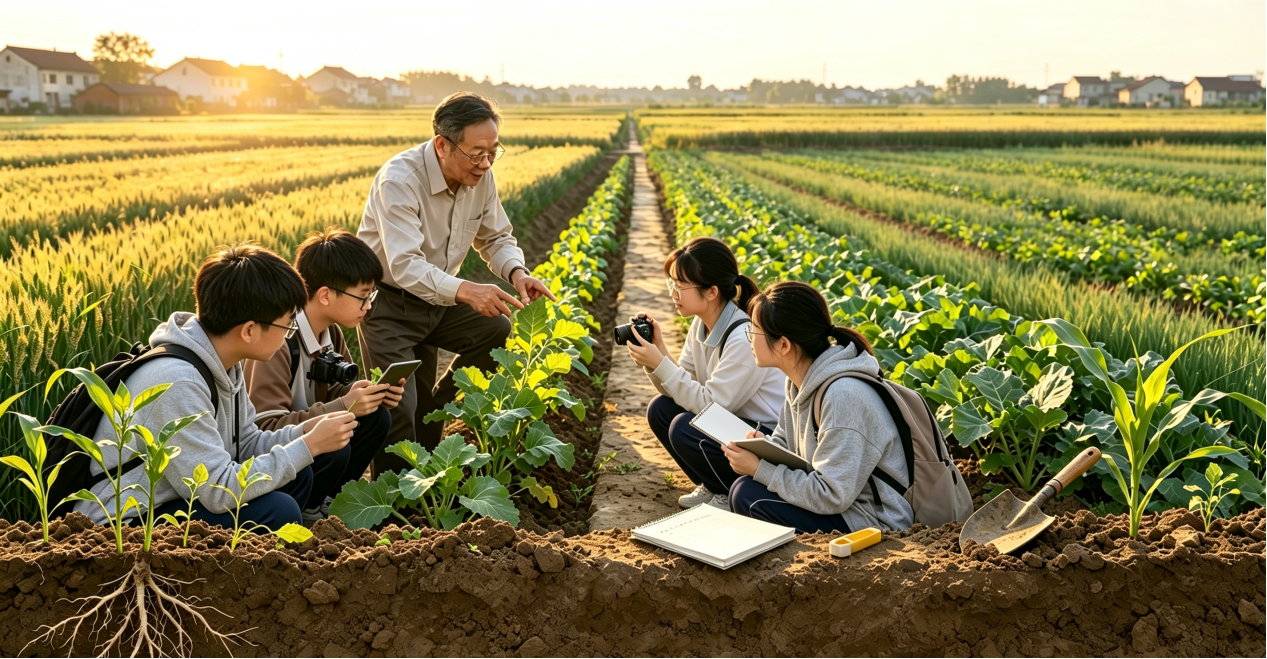
A “science and technology backyard (STB)” is a place where university students live and work in villages to help farmers.Zhang Fusuo, a professor at China Agricultural University, set up the first one in Quzhou County, Hebei Province, in 2009.Since then, postgraduate students have stayed in the countryside, lived with farmers and helped solve real problems in farming.
At first, students helped farmers one by one, which took a lot of time. Now they first help family farms and cooperatives (合作社) to use new technology. When nearby farmerssee the good results, they are willing to follow.
In 2023, Ye Songlin, a graduate student, and three classmates rented 67 hectares of farmland and began to provide agricultural services to big grain producers (种粮大户). Their business has developed into smart agriculture services, using machines and digital information to improve yields (产量). “I used to tell farmers what to do. Now I work with them and help them grow more,” Ye said.
Students are also trying new businesses. Fu Shan and her team made special flour from local wheat and started a bread brandin Quzhou. Other students helped villagers build organic fertilizer factories.
The backyards do more than show new farming methods. They also help train a new generation of agricultural service providers. Now, 16 STBs in Quzhou serve as places for testing new technologies. By 2028, more than 100 STBs across the country are expected to work with major grain and oil producers.
1.1. When was the first STB set up?
A In 2009.
B In 2016.
C In 2019.
D In 2023.
解析:选A。A 细节理解题。根据第一段“Zhang Fusuo, a professor at China Agricultural University, set up the first one in Quzhou County, Hebei Province, in 2009.”可知,第一个科技小院是2009年设立的。故选A。
2.2. How has the way STBs help farmers changed?
A They still help farmers one at a time.
B They only help rich farmers now.
C They no longer work in villages.
D They help larger groups first now.
解析:选D。D 推理判断题。根据第二段可知,过去“students helped farmers one by one, which took a lot of time”,现在“they first help family farms and cooperatives (合作社) to use new technology”,让周边农户“see the good results... are willing to follow”——即从“挨家挨户逐个帮”转为“先帮规模更大的经营主体、再带动周边农户”。故选D。
3.3. What did Ye Songlin and his classmates do?
A They made bread.
B They served farmers.
C They built fertilizer factories.
D They opened a restaurant.
解析:选B。B 细节理解题。第三段说叶松林和同学“rented 67 hectares of farmland and began to provide agricultural services to big grain producers”,B项“served farmers”正是“provide agricultural services”的同义改写。A做面包、C建有机肥厂分别是傅珊团队和其他学生的行为,属张冠李戴;D说“开饭店”,属无中生有。故选B。
4.4. What can we learn from Fu Shan’s story?
A Students can start village businesses.
B Farmers should not make bread.
C Wheat is the top crop in Quzhou.
D Bread brings farmers more money.
解析:选A。A 推理判断题。根据第四段的“Fu Shan and her team made special flour from local wheat and started a bread brand in Quzhou. Other students helped villagers build organic fertilizer factories.”傅珊做面包、其他学生建有机肥料厂,由此可推断学生能在农村开创各种新事业,A正确。
5.5. What is the best title for the passage?
A A Professor and His Wheat Fields.
B The Story of a Smart Agriculture Company.
C University Students Help Farming.
D Why Farmers Leave the Countryside.
解析:选C。C 主旨大意题。全文主线是“科技小院的学生住在村里帮农民种田并带动乡村发展”:从 2009年创办,到先帮新型经营主体、再到叶松林和傅珊等学生案例,最后落到人才培养——“University Students Help Farming”概括最准。A只抓住张福锁个人、B只抓叶松林案例,偏离主旨;D与全文主题相反。故选C。