
当平板电脑走进教室,利还是弊?
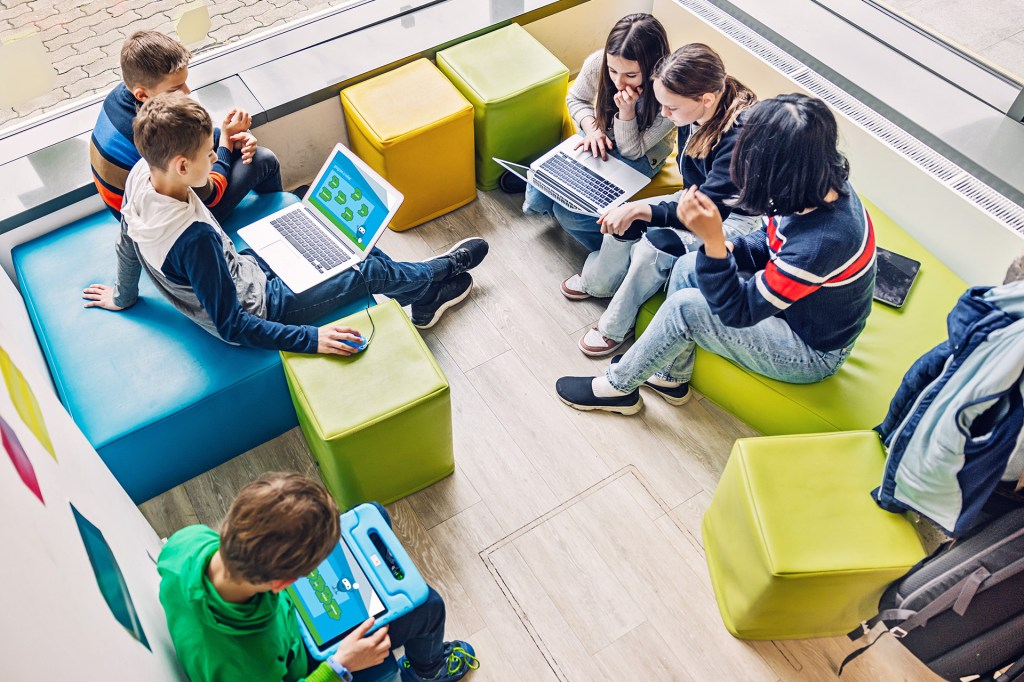
Do students use computers or tablets at your school? Many schools have them. In 2025, about 88 percent of public schools in the United States had a digital device for every student. These tools, like laptops and tablets, can help children learn.
These tools are important in our lives. They can make difficult tasks easier. They can help teachers do their work. Some students use laptops or tablets to do homework. They can also help students who learn in different ways. The tools can help them with writing and speaking. But some experts are worried about screen time in schools.
These tools are not always good. They can be distracting. They take away students’ attention. They make it hard to focus for a long time. So some schools are cutting down screen time. The Los Angeles school district is one example. It does not allow classroom screens before Grade 2. For older students, it also set limits. The district leader says the rules are about finding a healthy balance. The new rules took effect in August 2026.
Not all schools limit screens. Still, all students can try to use these tools in a healthy way. Janine Domingues is a psychologist (心理学家). She says computers can be useful tools in the classroom. Students should take “body breaks” from screens. This can mean moving their body. It can also mean going outside to rest.
1.1. What did most American public schools have for each student?
A A book and pencil.
B A computer or tablet.
C A desk and chair.
D A phone and watch.
解析:选B。B 细节理解题。根据第一段的“In 2025, about 88 percent of public schools in the United States had a digital device for every student. These tools, like laptops and tablets...”可知,大多数美国公立学校给每个学生一台电脑或平板。A“书和铅笔”、C“桌椅”、D“手机和手表”文中均未提到。故选B。
2.2. What can these tools help students do?
A Make schoolwork easier to finish.
B Help teachers do their work.
C Take away students’ attention.
D Give students more free time.
解析:选A。A 细节理解题。第二段提到“They can make difficult tasks easier.”以及“Some students use laptops or tablets to do homework.”说明这些工具能帮助学生更轻松地完成作业。B“帮助老师完成工作”与题干对象不符,C"夺走学生注意力"是第三段谈到的工具的负面影响,与题干 “help”(帮助)相悖;D"给学生更多空闲时间"在文中没有任何依据,属无中生有。故选A。
3.3. What does the underlined word “distracting” mean in Chinese?
A 使人分心的.
B 令人兴奋的.
C 让人专注的.
D 节省时间的.
解析:选A。A 词义猜测题。根据后文“They take away students’ attention. They make it hard to focus for a long time.”可知,这些工具会夺走学生的注意力,让人难以长时间专注,所以“distracting”意思是“使人分心的”。B“令人兴奋的”、C“让人专注的”、D“节省时间的”都与上下文不符。故选A。
4.4. What can we learn about the new rules in Los Angeles?
A Younger students use fewer screens.
B All students stop using screens.
C Students there have little homework.
D The rules started in July.
解析:选A。A 推理判断题。第三段“It does not allow classroom screens before Grade 2. For older students, it also set limits.”洛杉矶学区规定二年级之前(即幼儿园和一年级)不得在课堂使用屏幕,对二年级及以上学生也设定了使用限制,由此可推出低年级学生的屏幕使用更少。B“所有学生停止使用屏幕”表述绝对,原文仅为限制使用而非完全禁止;C项“那里学生的作业很少”文中完全没有提到,属无中生有;D“规定从七月开始实施”错误,原文说的是新规定在八月开始,时间不符。故选A。
5.5. What is the last paragraph mainly about?
A Body breaks from screens.
B Useful tools in the classroom.
C Writing and speaking skills.
D A healthy use of screens.
解析:选D。D 段落大意题。末段以“Not all schools limit screens”开头,紧接着点出全段中心句“all students can try to use these tools in a healthy way”,随后心理学家Janine Domingues补充的具体建议“take ‘body breaks’ from screens”都是“健康使用屏幕”这一中心的具体做法。A“离开屏幕做身体休息”只是健康使用屏幕的方法之一,是段中的一个例子,以偏概全;B“课堂上有用的工具”只是心理学家观点中的一句“computers can be useful tools in the classroom”,属于辅助说明,不能概括整段;C“写作和口语技能”是第二段提到的工具作用,末段并未涉及,张冠李戴。故选D。