
告别奶牛?科学家用“精准发酵”造牛奶
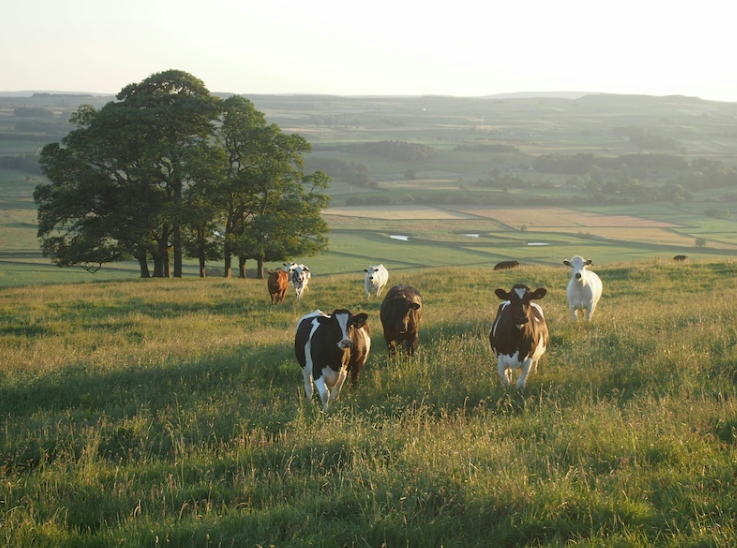
There are more alternatives to cow’s milk than ever before. But scientists are exploring another option that differs from the plant drinks already lining grocery shelves. Using a process known as precision fermentation (精准发酵), researchers can produce the same proteins found in dairy milk, without needing a cow.
A new study from researchers at Imperial College London suggests that the precision-fermented milk could use up to 96% less land than conventional cow’s milk. Precision fermentation uses microorganisms, such as bacteria, to produce specific ingredients. Researchers give the microorganisms instructions to make proteins found in milk. The microorganisms then grow inside large tanks, where they turn a sugar-based feed into the protein. The result is a milk product made without animals that tastes like dairy milk.
Although it may sound modern, the basic technology is far from new. Some aspects of this process have been used in food production for decades, including in the making of cheese. More recently, companies have begun using the technique to produce proteins traditionally taken from milk and eggs.
For their study, the researchers calculated the land required to produce precision-fermented milk. They compared it with the fields needed to raise dairy cows and grow their feed. They estimate that replacing 20% of the UK’s cow’s milk production with precision-fermented milk could free about 2.1 million acres of land by 2050. If it could replace all UK-produced cow’s milk, it would release an estimated 10.6 million acres, roughly the size of mainland Denmark. That land could then serve other environmental goals, including restoring forests or growing other food.The researchers point out that this could be particularly useful as countries try to balance food production with ambitious climate and biodiversity targets.
There are still plenty of questions to answer before companies could produce cow-free dairy at such a large scale. The researchers acknowledge that more study is needed to fully understand how much land it needs and what other environmental impacts it may have. Rather than asking consumers to give up dairy proteins altogether, precision fermentation could one day provide many of the same ingredients while requiring far less land.
原创编写 版权所有 侵权必究 每日更新 个性化阅读 英语飙升
1.1. What does precision fermentation enable researchers to do?
A Turn sugar-based feed into plant protein.
B Produce milk proteins without raising cows.
C Make plant drinks taste like dairy milk.
D Grow microorganisms to take the place of cows.
解析:选B。B 细节理解题。根据第一段的“researchers can produce the same proteins found in dairy milk, without the needing a cow.”以及第二段的“The result is a milk made without animals...”可知,精准发酵使研究人员能够在不养奶牛的情况下生产牛奶蛋白。A不正确,因为原文说的是把糖基饲料转化为蛋白质,并不是“plant protein”,而且最终得到的是奶蛋白;C不正确,原文说的是精准发酵奶的味道和乳制奶一样,不是让植物饮料尝起来像乳制奶;D不正确,微生物是生产工具,不是用来“代替奶牛”本身。故选B。
2.2. What can we learn from the study about replacing UK cow’s milk?
A It would make dairy farming more productive.
B It would have no environmental impact.
C It would be cheaper than plant drinks.
D It could free large areas of land for other purposes.
解析:选D。D 细节理解题。根据第四段,研究估算,如果精准发酵奶替代英国20%的牛奶生产,到2050年可释放约210万英亩土地;如果全部替代,可释放约1060万英亩土地,面积约等于丹麦大陆。原文还指出“That land could then serve other environmental goals, including restoring forests or growing other food.”因此可知,它能为其他用途释放大量土地。A中的“提高乳业生产效率”原文未提;B中的“没有环境影响”与原文“more study is needed... what other environmental impacts it may have”不符;C中的“比植物饮料便宜”原文未提。故选D。
3.3. What can be inferred about precision-fermented milk from the passage?
A It is still far from large-scale use.
B It will replace dairy soon.
C It needs more land than dairy.
D Shops already sell it widely.
解析:选A。A 推理判断题。根据最后一段的“There are still plenty of questions to answer before companies could produce cow-free dairy at such a large scale.”以及“more study is needed...”可推知,精准发酵奶距离大规模使用还很远。B说“很快会取代乳制奶”过于绝对,且与原文仍需大量研究不符;C说“比乳制奶需要更多土地”与原文“use up to 96% less land”相反;D说“商店已经广泛销售”在原文中没有依据。故选A。
4.4. What is the researchers’ attitude towards precision-fermented milk?
A Cautious but hopeful.
B Doubtful about its safety.
C Uninterested in its development.
D Fully confident and supportive.
解析:选A。A 观点态度题。最后一段中,研究者承认还有很多问题需要回答,也需要更多研究来了解土地需求和环境影响,这说明他们态度谨慎;但同时前文指出精准发酵奶可大幅减少土地占用,并可能帮助实现气候和生物多样性目标,最后也说“could one day provide many of the same ingredients while requiring far less land”,说明他们抱有希望。因此研究者态度是“谨慎但充满希望”。B中的“怀疑其安全性”原文未提;C中的“不感兴趣”与研究者开展研究、分析前景不符;D中的“完全自信且支持”过于绝对,因为研究者明确承认仍需更多研究。故选A。