
百年一遇:科学界新发现的猫科物种
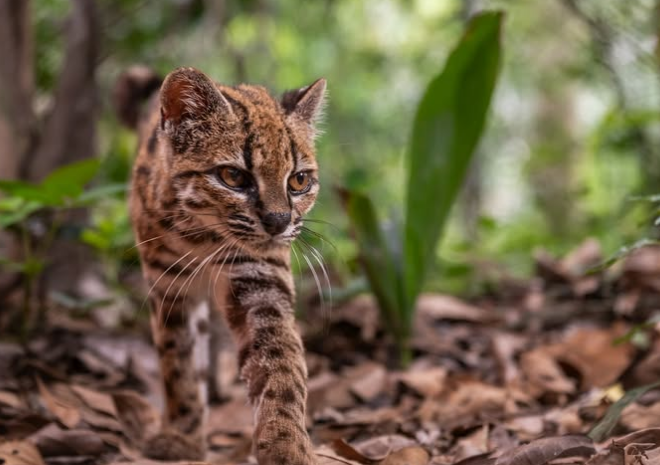
For the first time in more than a hundred years, a new cat species has been discovered. It all began in 2016, when a man saw a small cat beside a road near a forest in Bolivia and took it home. A year later, he realized his pet was something else. So he handed it to the Senda Verde wildlife sanctuary. There, the strange cat turned out to be unknown to science. Local people call it the tilcayo.
The tilcayo is smaller than a common house cat. It is about 18 inches long and weighs about three pounds, with round ears and dark spots on its fur. The animal lives in the Los Yung as forests of Bolivia, a wet mountain region that is often covered by clouds.
Proving that the tilcayo is a new species took years of work.The animals looked very much like tiger cats from Brazil, so appearance alone could not settle the matter. Biologist Paola Nogales-Ascarrunz turned to genetic testing, using samples from the animal found in 2016 and from a similar cat at the same sanctuary. Genetic studies showed that this cat’s lineage split off from the other tiger cats about 1.4 million years ago, which is why scientists now regard it as a species of its own.
Scientists gave the cat the name Leopardus tilcayo, which keeps its local name alive. Local communities have known the animal for a long time. When Nogales-Ascarrunz asked whether the name means something in Quechua (克丘亚语) or Aymara (艾马拉语), people said their grandfathers had always called it that. “This is traditional knowledge that they have in the community,” she said. “We want to preserve that knowledge, and we didn’t want to give it another name.”
The discovery does more than add one name to a list. It changes the family tree of cats and opens the way to more finds, many of which could be endangered. “Sometimes we think that most of the world is known,” Nogales-Ascarrunz said. “But in fact, it is the other way around. Even among cats, some things are undescribed — things that people have not found yet. So let’s go out, find them and protect them.”
原创编写 版权所有 侵权必究 每日更新 个性化阅读 英语飙升
1.1. What did the man do with the small cat at first?
A Kept it as a pet.
B Sold it to a park.
C Sent it to Brazil.
D Left it in the forest.
解析:选A。A 细节理解题。根据第一段的“a man saw a small cat… and took it home”和“A year later, he realized his pet was something else”可知,他先把小猫带回家当宠物养着,A对。B“卖给了公园”与原文相反,他是把它交给了野生动物保护区;C“送往巴西”是把巴西的虎猫拿来作比较,与这只猫的去向无关;D“留在森林里”与“took it home”正好相反。故选A。
2.2. What does the underlined word “lineage” in Paragraph 3 probably mean?
A Group of local names.
B Line of related animals.
C Set of fur patterns.
D Home of a wild cat.
解析:选B。B 词义猜测题。根据第三段“Genetic studies showed that this cat’s lineage split off from the other tiger cats about 1.4 million years ago”可知,这里说的是这种猫的“血统、世系”在大约140万年前从其他虎猫中分化出来,因此lineage最接近“Line of related animals”。A“当地名字的集合”来自第四段local name的干扰;C“皮毛图案的组合”来自第二段dark spots的干扰;D“野猫的家”来自第二段栖息地的干扰,均不符合基因研究语境。故选B。
3.3. What does the naming of the cat show about the scientists?
A A wish for a shorter name.
B Rules from older studies.
C Failure to create a name.
D Respect for local wisdom.
解析:选D。D 推理判断题。第四段说科学家给它取名Leopardus tilcayo,“which keeps its local name alive”,接着引研究者的原话:“This is traditional knowledge that they have in the community… We want to preserve that knowledge, and we didn’t want to give it another name.”——他们本可以另起一个名字,却选择沿用当地叫法、保存当地人积累下来的认识,由此可推出他们对当地人智慧的尊重,D对。A“想要更短的名字”、B“沿用旧研究的规则”文中都没有提到;C“没能取出新名字”与原文相反,是他们主动不想另起名字。故选D。
4.4. What is the best title for the text?
A A Cat New to Science.
B Rescue in the Forest.
C Life in Cloud Forests.
D How to Name an Animal.
解析:选A。A 主旨大意题。文章从一只被人捡到的小猫讲起,说明它如何被确认为新物种、为什么沿用当地名字,以及这一发现对认识猫科动物家族的意义,A“一个新到科学界的猫”能概括全文。B“森林里的一次救助”只对应开头一件事;C“云雾林中的生活”只对应第二段的栖息地;D“如何给新物种命名”只对应第四段,三者都是以偏概全。