
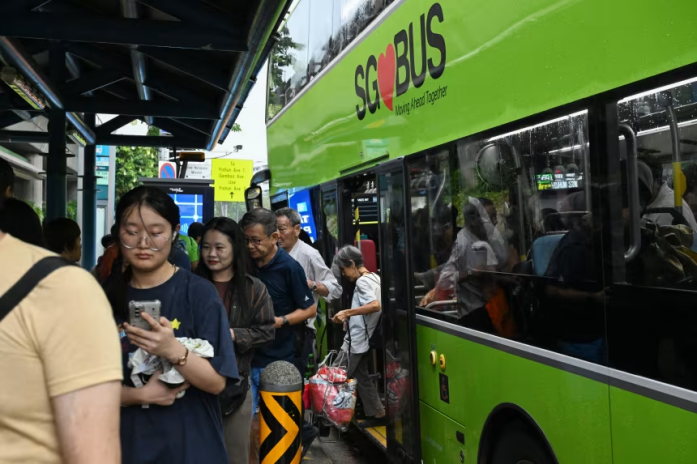
公交车上别任性!新加坡新规:最高罚5000新元
1.1.How do people feel when someone plays loud music on a bus?
A They do not mind it.
B They ask the person to stop.
C They get off the bus at once.
D They get angry about it.
解析:选D。D 细节理解题。根据第一段“They may feel angry and upset, but often there is little they can do about it.”可知,车上有人大声放音乐时,乘客会生气、心烦,选项D“They get angry about it.”正是这一意思的同义替换,所以选D。A项“不介意”与原文的生气、心烦相反;B项“请对方停下”与原文“often there is little they can do about it”(常常无能为力)不符;C项“马上下车”文中没有提到。故选D。
2.2. What does the underlined word “disruptive” in Paragraph 2 mean?
A Making money.
B Causing trouble.
C Following rules.
D Helping others.
解析:选B。B 词义猜测题。根据第二段“such disruptive behavior may cost you a lot of money in Singapore”,such指代前一段那种让人厌烦的行为;紧接着该段又说新规是为了“stop bad acts on public buses”,可见disruptive与bad acts 意思相同,指“制造麻烦、扰乱秩序”,所以选B“Causing trouble”。A项“赚钱”与后文被罚款、“cost you a lot of money”相反;C项“遵守规则”与这些被明令禁止的行为相反;D项“帮助他人”也不符合语境。故选B。
3.3.What may happen if a passenger makes the bus very dirty?
A Pay 500 dollars.
B Get a warning first.
C Pay up to 5,000 dollars.
D Clean the bus.
解析:选C。C 细节理解题。根据第三段“More serious acts, such as putting other passengers in danger or making the bus extremely dirty, may bring a fine of up to 5,000 Singapore dollars.”可知,把公交车弄得很脏属于较严重的行为,最高可罚5000新元(选项中简写为dollars,特指新加坡元,并非美元),所以选C“Pay up to 5,000 dollars.”。A项“Pay 500 dollars”是较轻违规的金额,而且原文写的是“up to 500”,与本题这一档不符;B项“Get a warning first”文中没有提到,原文对这一档直接规定的是罚款;D项“Clean the bus”是生活中常见的处理办法,原文并没有这种处理方式。故选C。
4.4.What does the example of Japan show?
A Being quiet is polite.
B Trains in Japan are usually full.
C Japanese people enjoy talking.
D Japan has strict laws.
解析:选A。A 推理判断题。根据第四段“In Japan, passengers are expected to keep quiet on trains. Making phone calls or talking loudly is considered impolite, because it may trouble other passengers.”可知,在日本,保持安静是被期待的做法,大声打电话、大声说话被视为不礼貌,反过来说明安静在那里是有礼貌、被看重的,所以选A“Being quiet is polite.”。B项“日本火车通常很满”文中未提;C项“日本人喜欢聊天”与原文强调的安静相反;D项“日本有严格的法律”不能选——原文说的是“被期待”“被认为不礼貌”,并没有提到法律或罚款。故选A。
5.5.What is the passage mainly about?
A Why buses are often noisy.
B How to keep a bus clean.
C Life on Singapore’s subways.
D New rules for public transport.
解析:选D。D 主旨大意题。文章先讲新加坡为制止公交车上的不文明行为制定新规并规定罚款,再引用官方的话说明公共交通是“shared place”、人人应尽一份力,最后说伦敦、北京、多伦多、南特等地也有类似规定或执法行动,贯穿全文的中心就是“公共交通的新规则”,所以选 D“New rules for public transport.”。A项“公交车为什么常常很吵”只对应第一段的背景;B项“如何保持公交车清洁”只是罚款条款里的一小部分;C项“新加坡地铁上的生活”既窄又偏,全篇只有第四段一句话写到地铁。故选D。