
法国研究:坚持有氧运动,身体“储备”更充足?(语法填空)
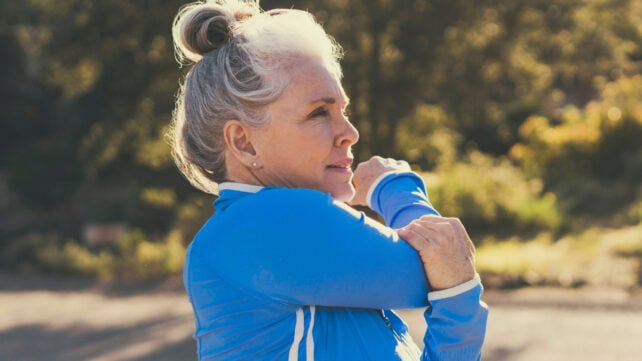
Two people can celebrate the same birthday while their bodies have aged very differently. One may have more physical capacity to draw on than the other. Scientists call this hidden capacity “vitality capacity” — it gives the body the power ___1___ (keep)working under pressure. A new study links one familiar habit to having more of it: continuing aerobic exercise for decades.
Researchers in France found that healthy adults over 55, ___2___ had exercised regularly for 30 years, had higher vitality capacity than inactive peers. The clearest difference was not muscle strength ___3___ the timing between heartbeats and blood-oxygen levels. That, however, does not show that exercise ___4___ (cause)the difference.
Discussions of healthy old age often focus ___5___ disease. Vitality capacity asks a different question: how much capacity remains in the body’s systems when they are under pressure? It covers immune and stress ___6___ (response), the way the body uses energy, and muscle function.
The researchers studied 39 adults from the Nice area, averaging about 64 years old. Nineteen had done aerobic activity at least three times a week for 30 years; the other 20 did no regular sport. Questionnaires and a sensor ___7___ (confirm)the difference.
The team combined 12 measures into a single score, and lifelong exercisers came out ahead. Active participants had an average blood-oxygen level of 96.8 per cent, ___8___ (compare)with 94.8 per cent in the inactive group, and their heart rhythm showed a clear difference: 49.9 versus 27.2 milliseconds.
Yet the active group did not do better in every measure: blood tests showed no clear difference. Older participants also tended to have ___9___ (low)scores. The inactive group was also ___10___ (usual)healthy, which may have made the groups look more similar.
原创编写 版权所有 侵权必究 每日更新 个性化阅读 英语飙升
1.1.
A
B
C
D
解析:选to keep。to keep 考查非谓语动词(不定式作后置定语)。固定结构 the power to do sth “做某事的能力”,不定式 to do 放在名词 power 后面作后置定语,用来修饰 power,说明能力的内容。句意:它赋予身体在压力下持续运转的能力。故填to keep。
2.2.
A
B
C
D
解析:选who。who 考查定语从句关系代词。前文“healthy adults over 55”是先行词,后文“had exercised regularly for 30 years”是对这组人运动史的补充,再往后还拿他们与“inactive peers”作对比——可见空格处是从句主语、指人。同时空格前有逗号,属非限制性定语从句,此处不能用that,只能用who。故填who。
3.3.
A
B
C
D
解析:选but。but 考查并列连词(not…but…)。前半句先否定“The clearest difference was not muscle strength”,后半句给出真正落点“the timing between heartbeats and blood-oxygen levels”;下一段又用96.8对94.8、49.9对27.2两组数字坐实“差别就在这两项”。一否定一肯定构成对照,故填but。
4.4.
A
B
C
D
解析:选caused。caused 考查谓语动词时态。上一句刚交代研究发现(差别在心跳与血氧),本句用插入语however表转折,紧跟“That, however, does not show that…”对结论加以限定,提醒我们仅观察到差异不等于证明因果,描述研究当时观测到的现象;主句does not show为一般现在时;宾语从句讲的是“运动造成了已观察到的差异”,这是过去事件,故用caused。不能因为主句是现在时就用causes。故填caused。
5.5.
A
B
C
D
解析:选on。on 考查介词(固定搭配)。上下文:本段首句讲人们讨论健康老龄化时“often focus ___ disease”,紧接着用“Vitality capacity asks a different question”作对比,可见这里讲的是“把注意力放在什么上”。这里用的是固定搭配 focus on;focus 在此为不及物用法,on 引出聚焦对象。故填on。
6.6.
A
B
C
D
解析:选responses。responses 考查名词复数。本句以covers引出“储备涵盖的内容”,后面并列了“the way the body uses energy, and muscle function”等多项;immune 和 stress 是并列定语,分别修饰 responses,即 immune responses 和 stress responses;response 为可数名词,故用复数 responses。故填responses。
7.7.
A
B
C
D
解析:选confirmed。confirmed 考查谓语动词时态。本段先交代分组:“Nineteen had done aerobic activity…”“the other 20 did no regular sport”,空格句说“Questionnaires and a sensor ___ the difference”,指的是研究过程中证实两组差异这一步,与全段过去时叙述一致。故填confirmed。
8.8.
A
B
C
D
解析:选compared。compared 考查非谓语动词(过去分词作状语)。本句前后摆着两个数值:运动组的“96.8 per cent”与“94.8 per cent in the inactive group”,空格处就是把两者放在一起比较的固定写法;它与句子主语不构成主动关系,用过去分词形式。故填compared。
9.9.
A
B
C
D
解析:选lower。lower 考查形容词比较级。本段开头刚说“lifelong exercisers came out ahead”(终身运动者得分更高),空格句转向“Older participants”,这里把年纪更大的参与者与较年轻者相比,得分往往更低,故用比较级lower。故填lower。
10.10.
A
B
C
D
解析:选unusually。unusually 考查词性转换(副词)。空格前是was also,空格后是形容词healthy,说明空格要修饰healthy;而后面which从句给出解释——“which may have made the groups look more similar”,即不运动组的健康程度出人意料,所以才缩小了两组差距。由此判断填副词,表“异常地”。故填unusually。