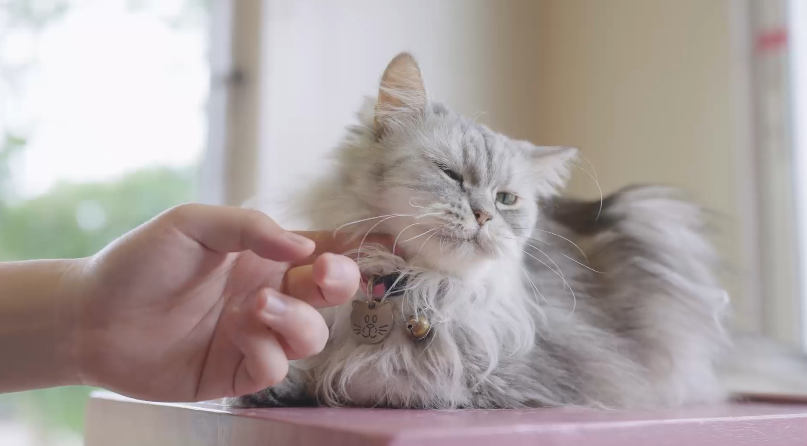
Humans still routinely misunderstand cats. Our new study, published in Frontiers in Ethology, shows just how little people understand the cues cats give.
We asked 368 Australian participants to watch videos of human — cat play interactions. But not all the videos were “play” for the cat. Only half of the cats were playing, while the other half were actually showing signs they didn’t want to play, or were feeling stressed by the interaction. After each video, participants were asked if they thought the interaction was overall positive or negative for the cat, based only on the cat’s behaviour. They were then asked how they would interact with the cat in the video they had just seen.
Results showed that participants struggled to recognise negative cues indicating discomfort or stress in cats. For videos of cats who weren’t playing and were showing subtle negative cues (such as sudden tension in the body or avoiding touch), participants only recognised the negative cues about as well as chance (48.7%). Even when participants watched videos of cats showing overt negative cues like hissing, biting or trying to escape, they still incorrectly categorised these as positive 25% of the time. Even when participants did successfully recognise negative cues, they often chose to engage with the cat in ways that would cause more stress and increase the risk of human injury, such as stroking, belly rubbing and playing with hands.
Stress can have serious consequences. Cats who experience regular or prolonged stress (including from unwanted interactions like those in the negative videos) are at higher risk of health issues. They’re also more likely to develop behaviours people find problematic, such as increased aggression. Cat stress is bad for humans, too. If a person doesn’t heed early warning signs, the cat may bite or scratch, depositing bacteria and microorganisms deep into the skin. Rapid infection follows 30%-50% of cat bites. If not treated promptly, it can lead to serious complications including sepsis (败血症), chronic health issues and even death. Cat bites and scratches can also transmit zoonotic diseases such as cat scratch disease.





 更多优质学习内容